
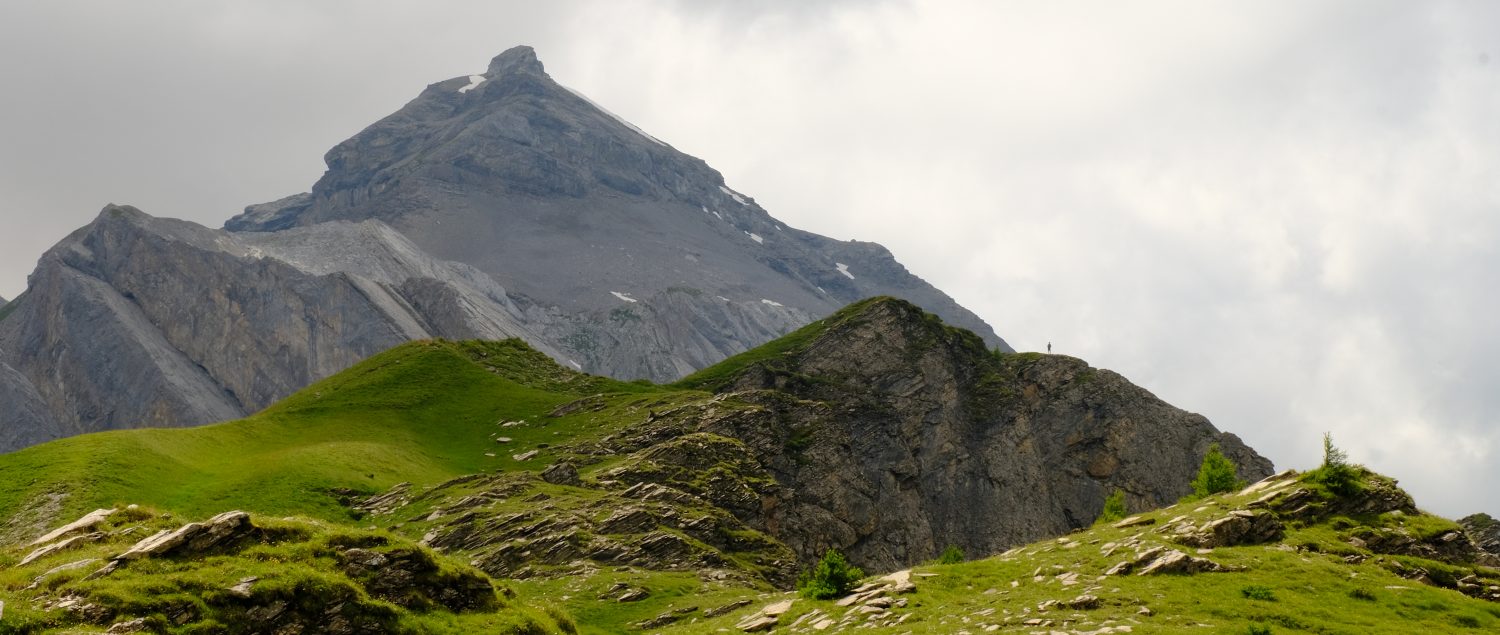
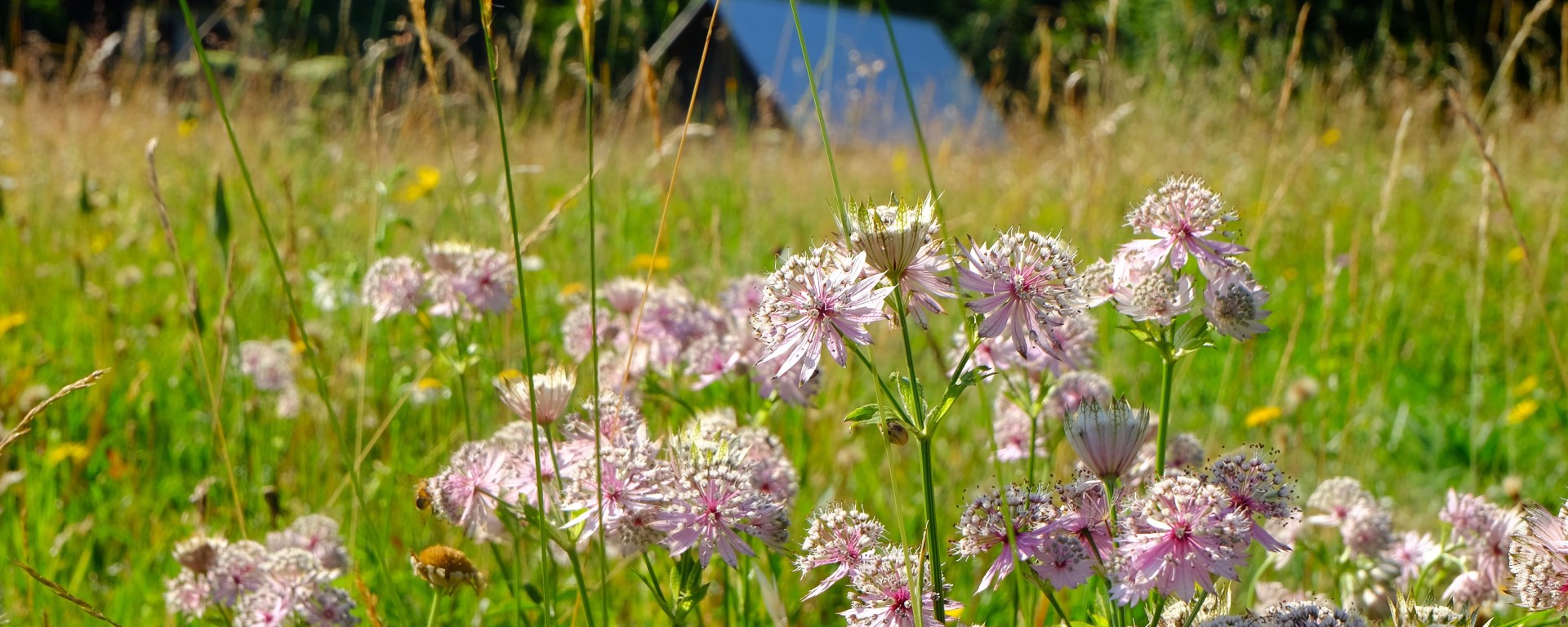
Stage 8 of the 270km circular Juliana Trail runs from Bohinjska Bistrica to Podbrdo over the historic Vrh Bače pass. Most of the walk is through dappled beech trees punctuated with a big variety of woodland plants. The meadow clearings were alive with insects feasting on the abundant flowers.
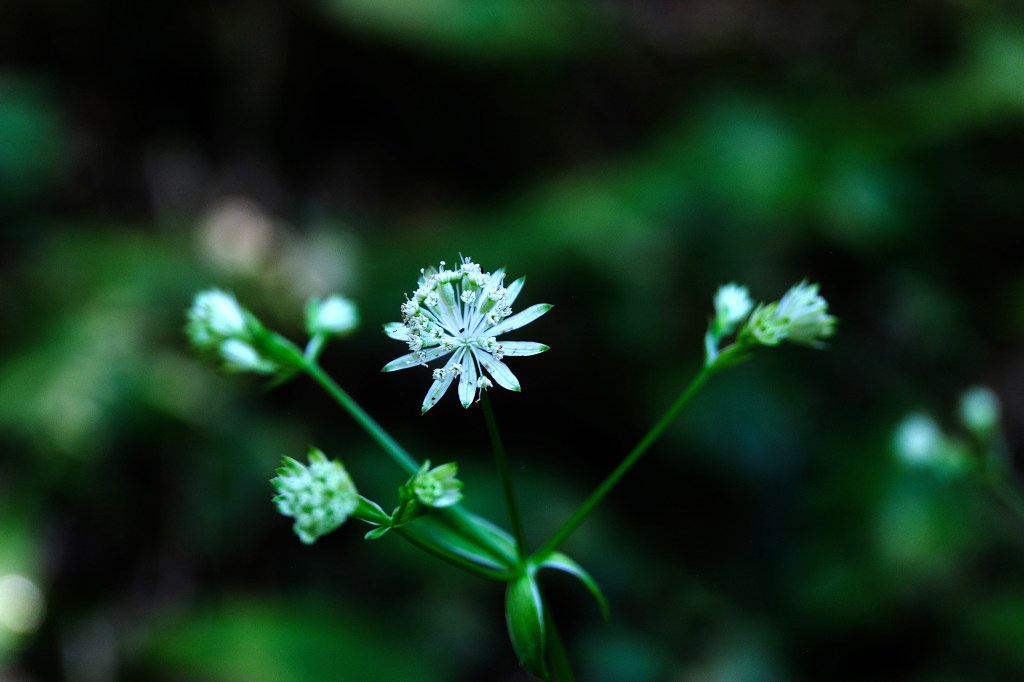
Photo Credit: Sally Woodbridge
The forecast was for another stinking hot day, so a 6:45am start and a shady woodland path was the plan. We’d be following stage 8 of the 270km long Juliana Trail. This is one of the more challenging stages at nearly 14km with 800m height gain. It’s a linear walk so we debated whether to get the train out and walk back or visa versa. The first train wasn’t that early, and we’d come to conclusion that, although the public transport vehicles and drivers were excellent, the timetables reflect an aspiration rather than reality.
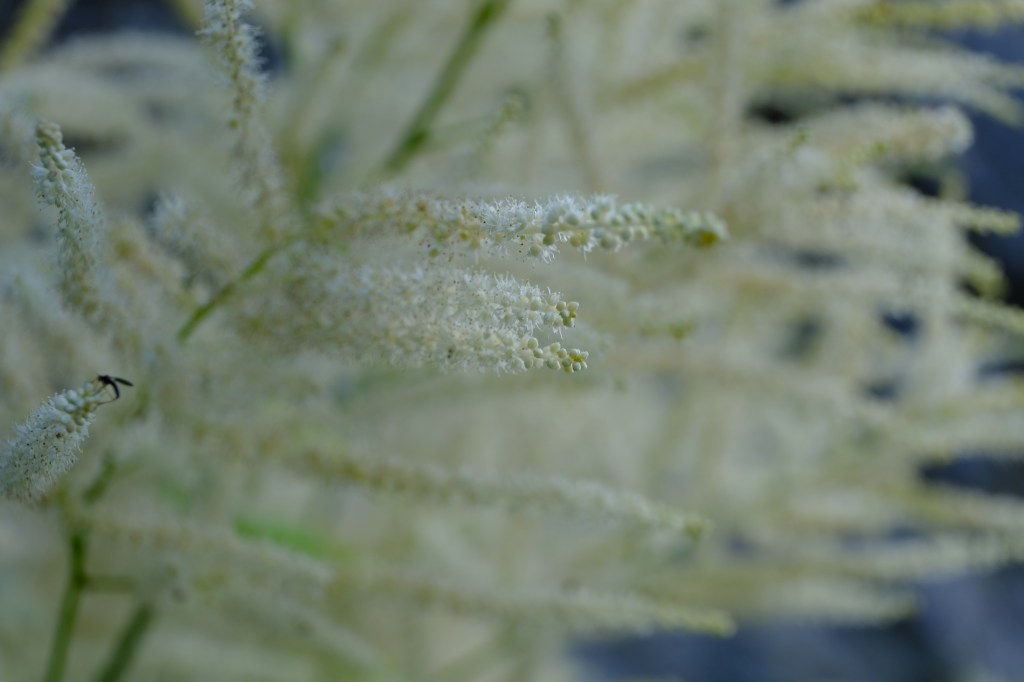
Photo Credit: Sally Woodbridge
We left the slowly rousing town on a tree-shaded path and popped out into a little hamlet with people already tending their vegetable patches, a village pond and dusty but well fed cats. The beech woodlands reminded me of the Chiltern Hills but the understory was totally different with glossy hepatica leaves, tall, willowy white ranunculus, a froth of goatsbeard spirea and lilac orchids.
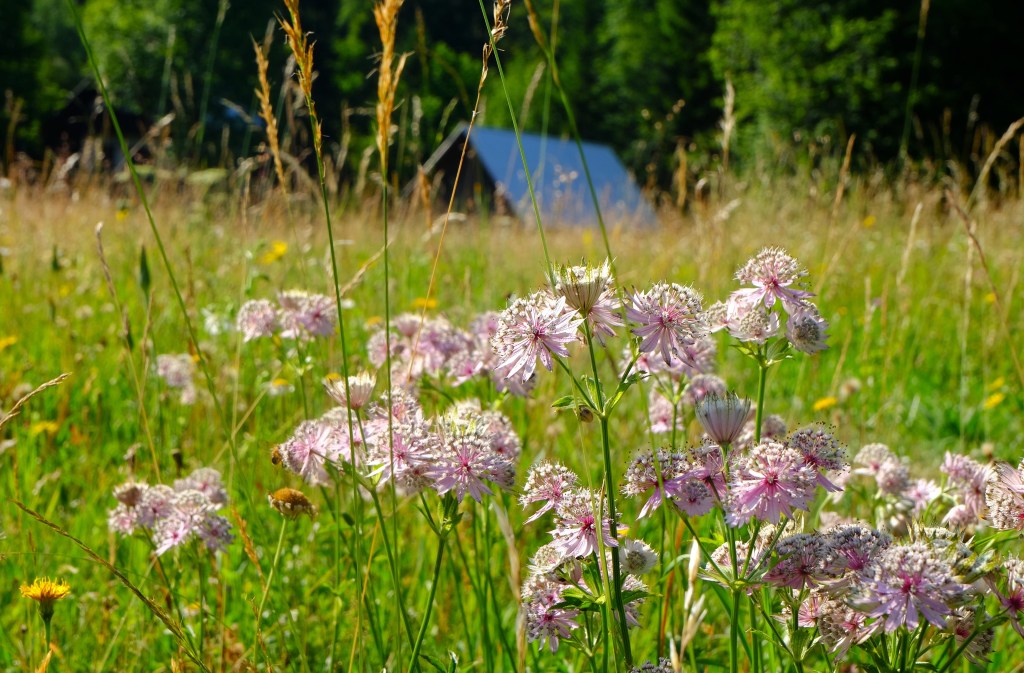
Photo Credit: Nick Haine
The route varied between narrow, stony, brutally steep trails and rough 4X4 tracks. The woodland was humid and the few meadows were retina searingly bright butterfly havens. The top of the pass appeared surprisingly quickly after starting the final ascent. It was a natural crossing point for paths from the valleys and along the ridge.
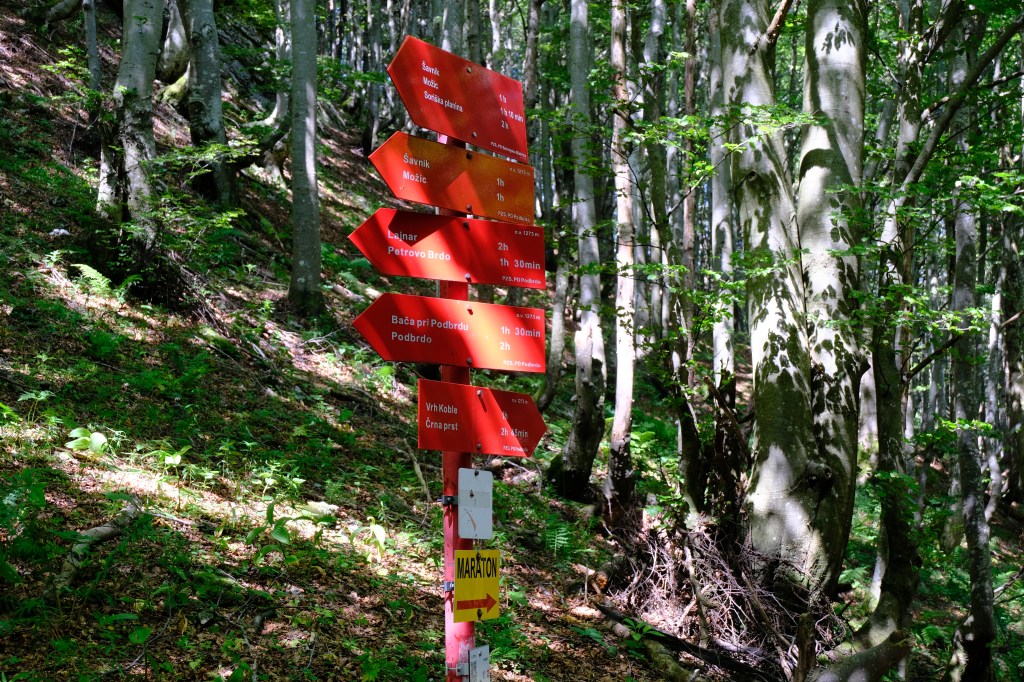
Photo Credit: Sally Woodbridge
It is here that the Juliana Trail cuts across an old border. In 1918, at the end of World War I, on the signing of the peace treaty between the Austro-Hungarian Empire and Italy, Italian soldiers occupied the area to the south and west. This border was finalised in the 1920 Treaty of Rapallo between the Kingdom of Italy and the Kingdom of Serbs, Croats and Slovenes running from the peak Peča above the Austrian village of Rateče to Rijeka in Croatia. It remained in place until the surrender of the Italians in 1943 following the invasion of the Axis powers, led by Germany in April 1941.
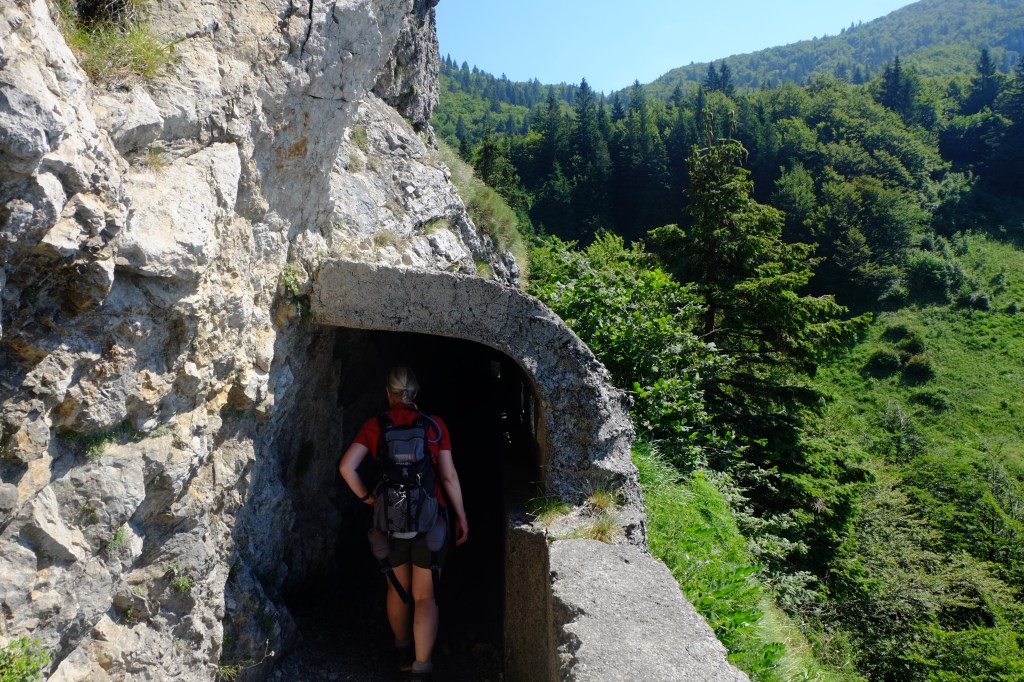
Photo Credit: Nick Haine
You can follow a narrow path with steep drops below it to access the border fortification. North of this, where we started the day, inhabitants managed to maintain their Slovenian culture but on the other side people were subjected to forced italianisation under Mussollini. There are expansive views from this slightly creepy edifice south into the Primorska region but not quite as far as the 46.6km Slovenian coastline on the Adriatic Sea.
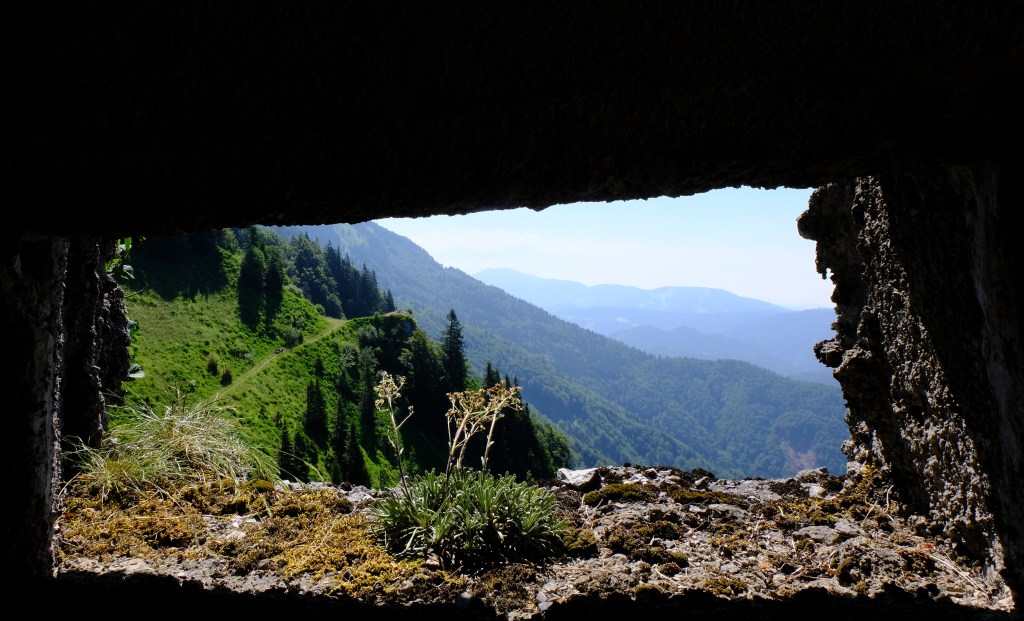
Photo Credit: Sally Woodbridge
The descent path is super steep at first beside a little gully but soon turns into a really well-graded zigzag path supported by stone embankments and cushioned underfoot by deep soft beech leaf litter. It was a south-facing slope though and despite the distraction of the abundant flowers I became anxious as the heat built and built.
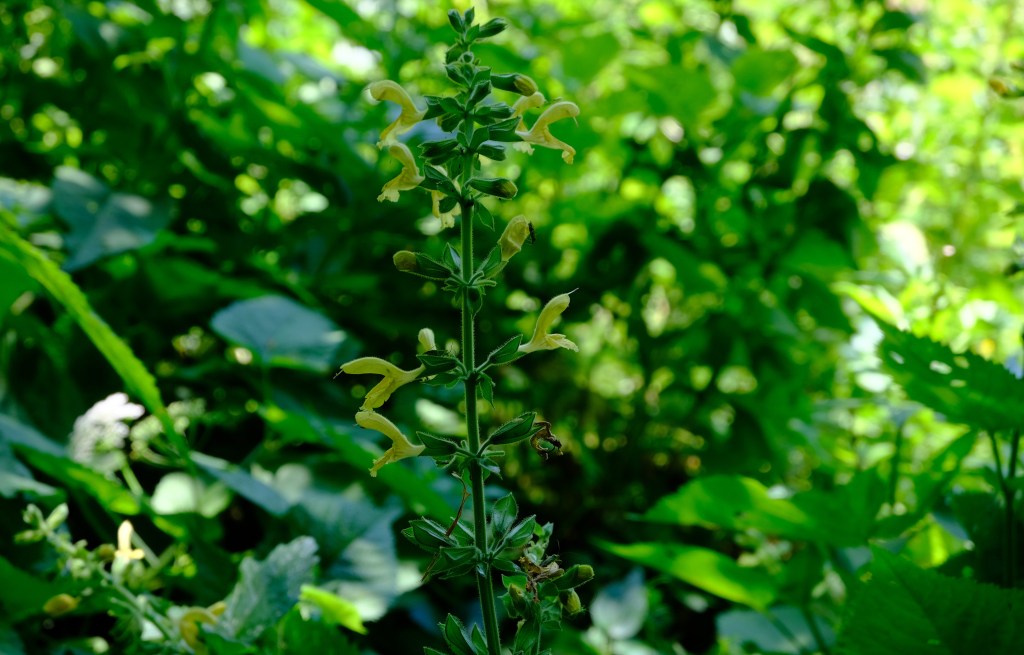
Photo Credit: Sally Woodbridge
Entering Podbrdo felt like walking into a furnace. We found a friendly, but most importantly, air-conditioned, 70’s throwback of a bar for a cold drink. An equally efficiently air-conditioned train whisked us back to Bohinjska Bistrica from the deserted spaghetti-western Podbrdo station. It was only 55minutes late.
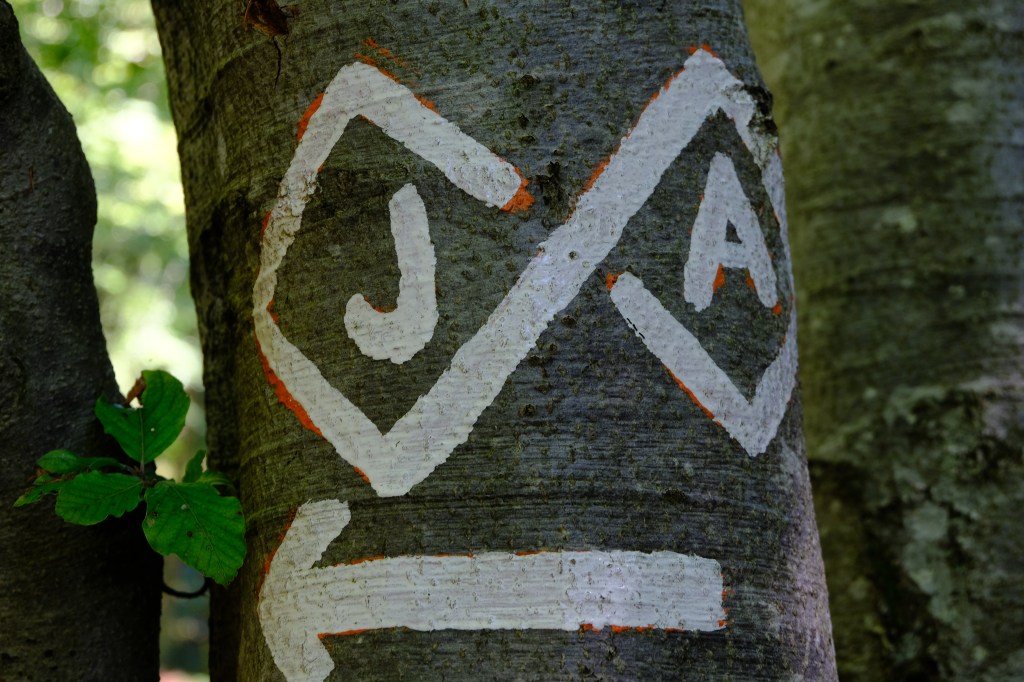
Photo Credit: Sally Woodbridge
Please remember that outdoor activities like walking come with inherent risks. The author has endeavoured to make the information as accurate as possible at the time of writing but the decision to undertake the walk is entirely at your own risk. No responsibility can be accepted for any kind of physical injury, loss or damage to you or your property.
If you enjoyed this please enter your email address below to follow this blog and receive notifications of new posts by email.

