
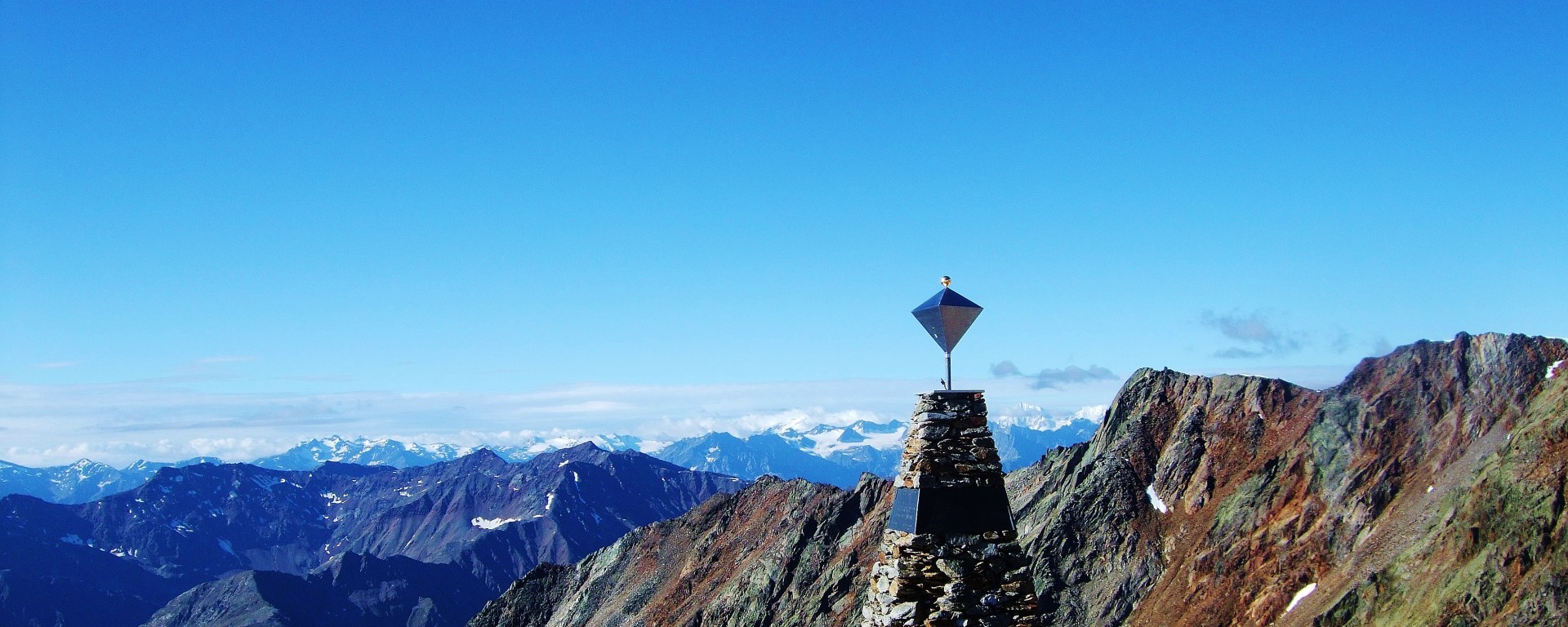
We never met here, but this is where I feel closest to him. There is crunching, glitter-hard snow beneath my mountaineering boots. On my right is the huge white heft of the mountain Similaun, on my left the jagged fangs of rocky Fineilspitze, behind me the green abundance of Italy, ahead the blank glaciers and concrete grey rock of Austria. Sitting here at his simple, pyramidal stone and steel memorial, listening to the soft tink of individual snow crystals melting, I imagine his life. And his violent death. Two years later I saw him in Bolzano. I knew, staring at his smooth, chestnut skin with its thin film of cold wetness, I was over 5,300 years too late to see Ötzi the iceman alive. But I had bonded to him there on that alpine col.
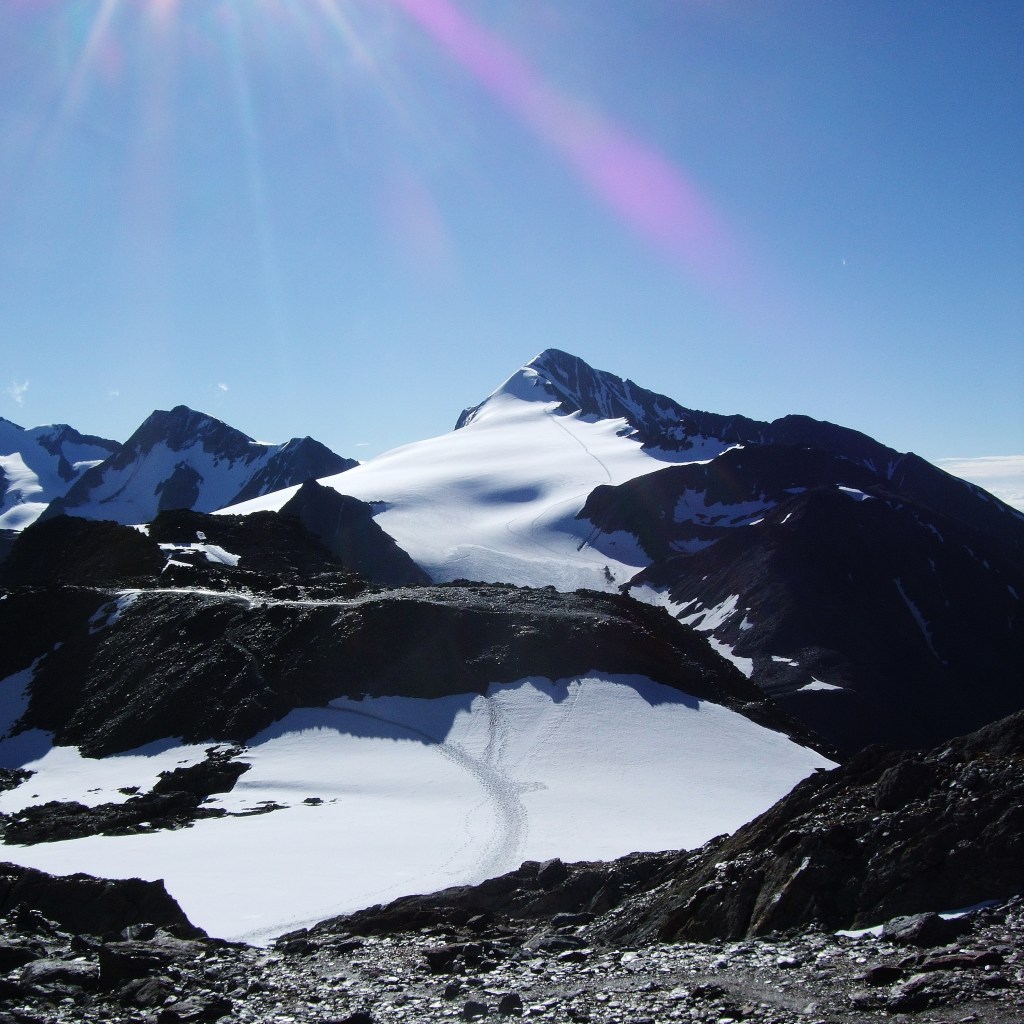
photo credit: Sally Woodbridge
As a mountaineer, the emotions invoked by a death in the mountains are visceral. Every death leaves an enduring void in that space. I can still hear the echo of his fierce hold on life snapping in this shattered landscape. So far from shelter and help. In my mind I can return to that snowbound pass. I can run beside him. Fleeing with him from his murderers up the mountain.
My mountain boots would bite and grip the snow unlike his bear skin soles. Our ragged breaths would draw stinging icy air deep into our lungs. Our noses would smell the same acrid sweat of fear in the cold sterile air, mingling with his musky human odour. We would both curse the weight of our rucksacks, but neither of us would drop them. If we survived we would need their contents to treat our wounds, to keep us warm. Ötzi, short, light and sinewy would pass me, my coddled limbs failing whilst his worn, damaged joints propelled him forward. Then, with the next valley almost in sight, I would see him fall.
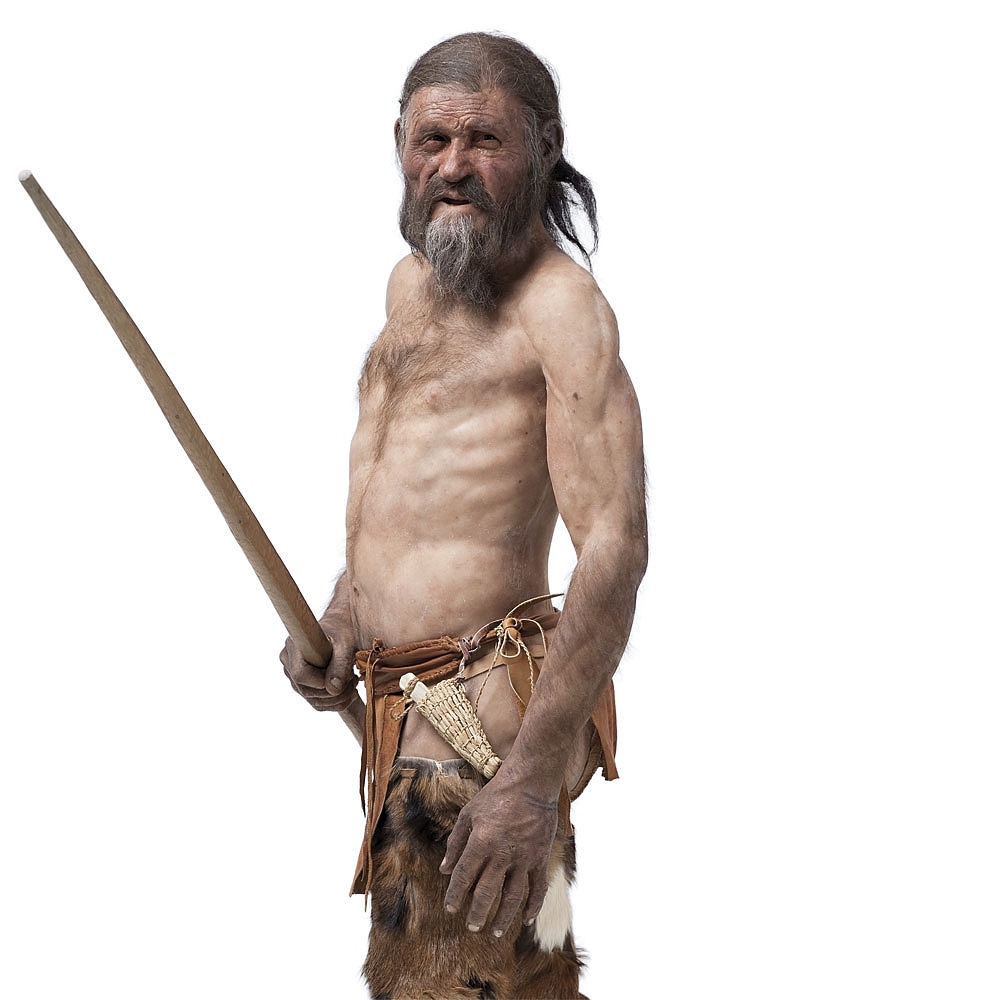
© South Tyrol Museum of Archaeology/Ochsenreiter
With my lungs and throat burning, my vision darkening at the edges, I would see the bright blood trickle from his head onto the perfect white snow, then red bloom from beneath him, pouring out from the arrow wound in his upper back. Stepping back, I would watch, dazed, as his murderer roughly lifted him to retrieve the arrow shaft, leaving the flint arrowhead deep within his lifeless body forever. Why was he killed? And why did they leave his precious copper axe with him? Questions about his death, and life, will always exist.
Why was he killed? And why did they leave his precious copper axe with him? Questions about his death, and life, will always exist.
I found many answers at his museum. Reading the stories of his discovery and the research into every item of clothing, every piece of equipment and every inch of his wonderfully ice-preserved body expanded my understanding. This summer I’ve explored the museum’s excellent website to deepen my knowledge ( http://www.iceman.it/ ).
Usually my mountain summers allow me to deeply connect with my surroundings. But how limited is my understanding compared to his? I know where to snack on tiny fragrant wild strawberries and dusky purple bilberries, when and where to watch the chamois clatter across the vertical rock walls and the best place to gather sweet stone-filtered water from the green flush where the spring rises. But I don’t know where to gather medicinal herbs or what plant material will coax a spark into a fire, or how to stalk prey. Ötzi would know. Ötzi could teach me.
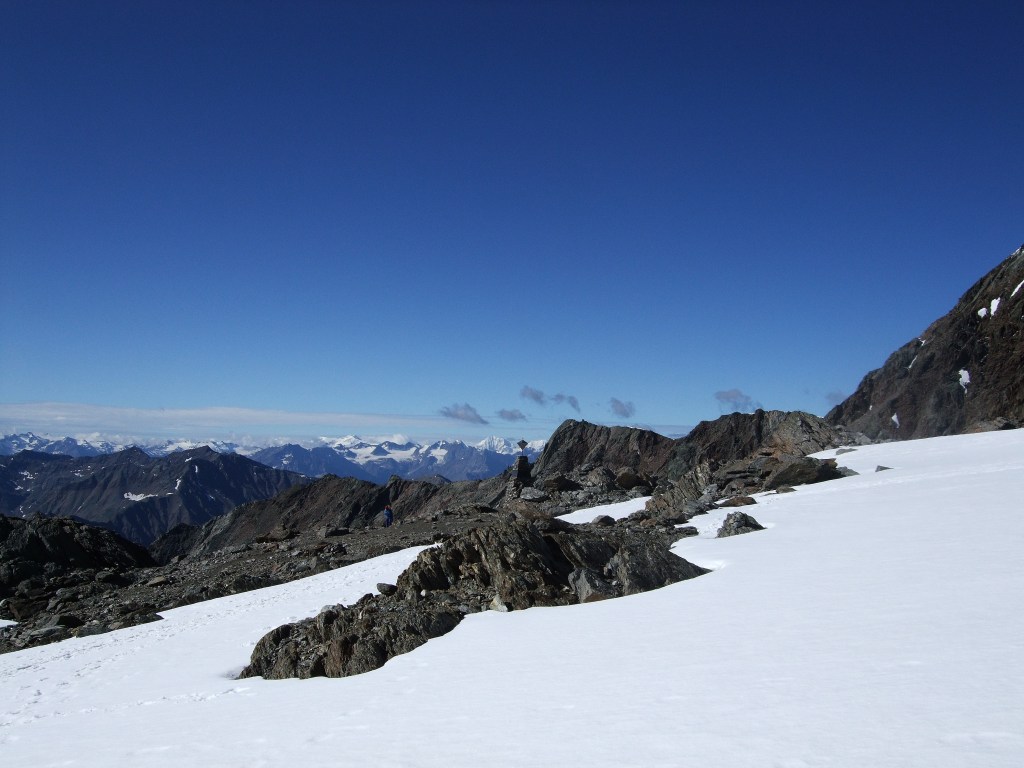
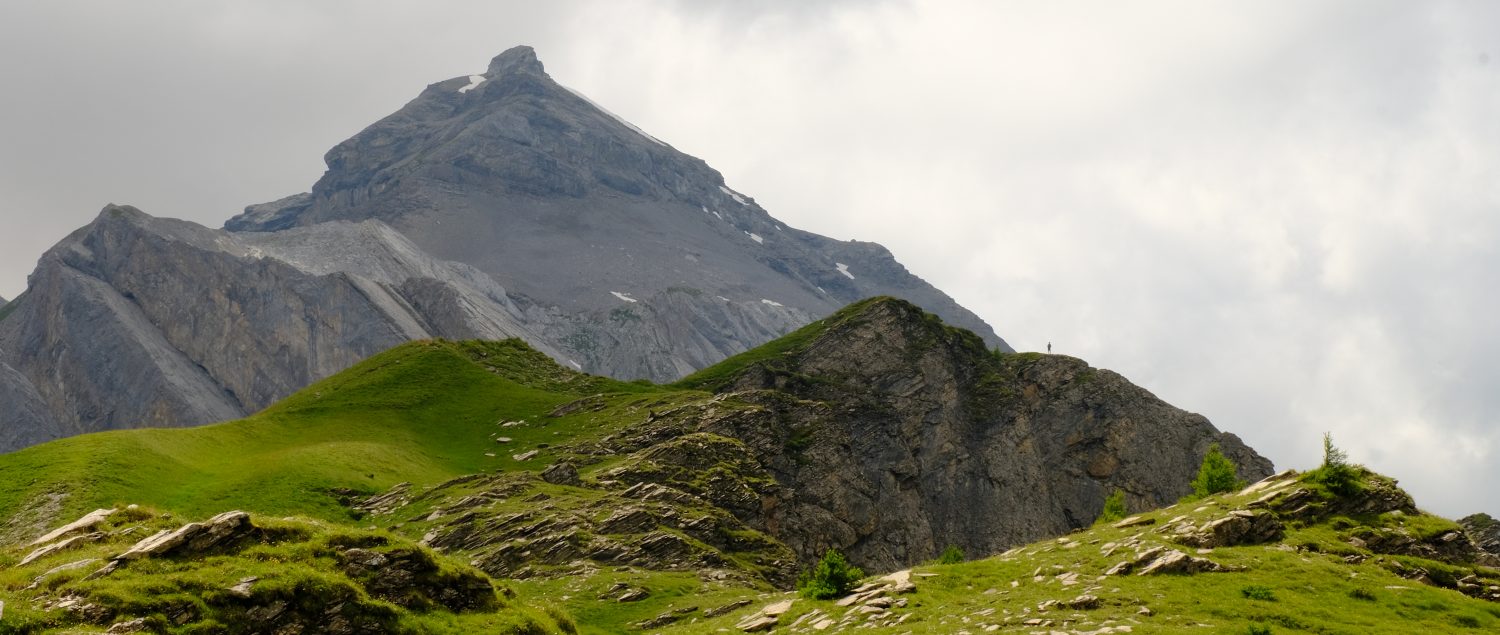
Photo Credit: Sally Woodbridge
Recent research suggests journeys across these mountains in the copper age were more common than we had assumed. I see Ötzi crossing these huge barriers of rock and snow with the change of the seasons. In the distance his small muscular body, protected in his warm goat hide coat and trousers descends through the ice and rock with care and confidence. Just as I hope to do as a mountaineer. I’d love to go back to that alpine pass and sit by his memorial again; especially knowing what I’ve learnt. But most of all I’d love to go back and meet Ötzi.
“The past is a foreign country: they do things differently there.”
LP Hartley

