
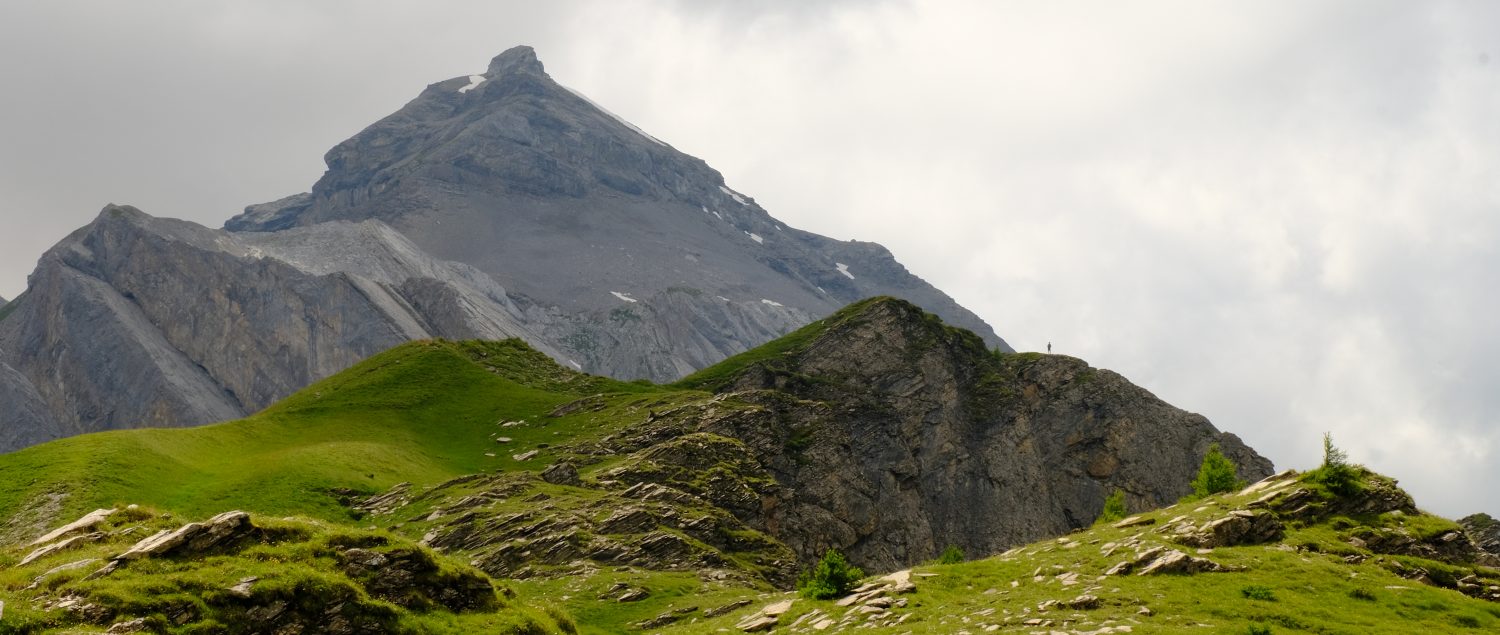
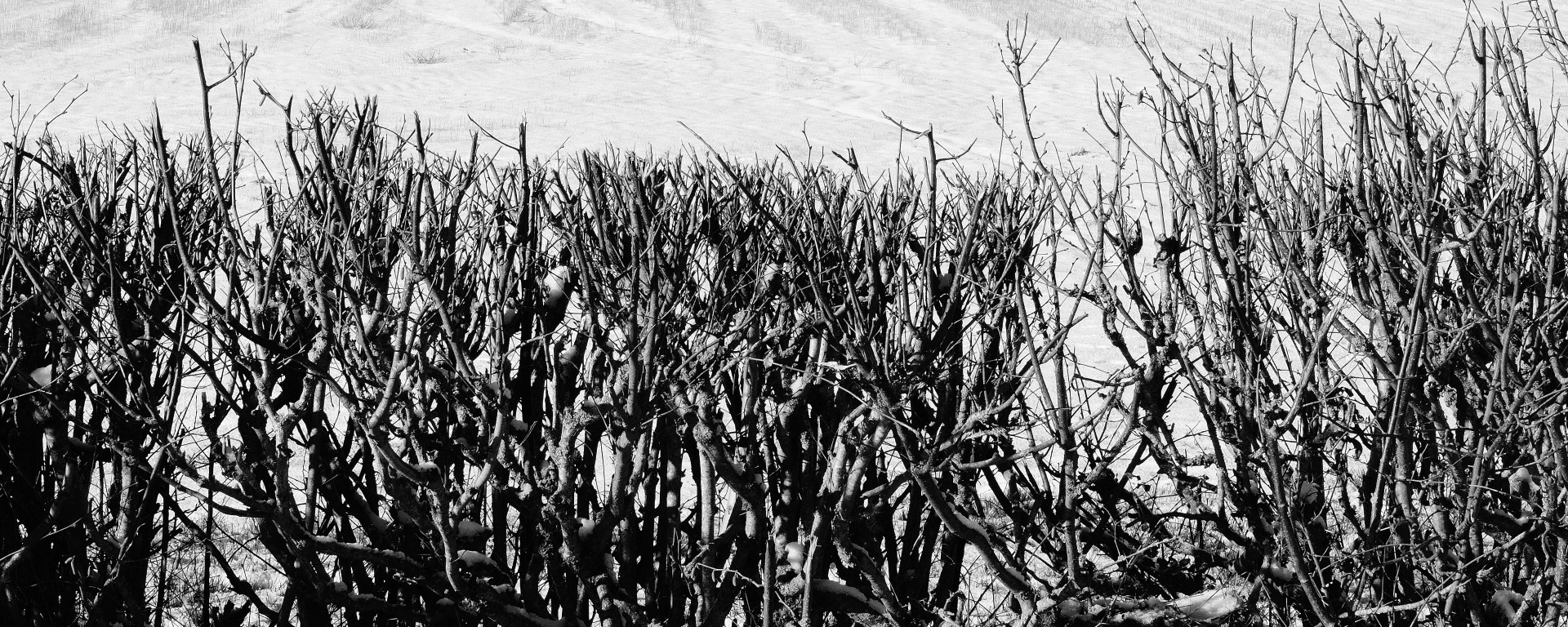
Nothing to see in January fields and hedges? Think again! The low sun slants across the undulations of the open ground revealing the echoes of past human activity. Cross these hummocks to the hedgerows and snuggle up close to appreciate these.
Traveller’s Joy (Clematis vitalba)
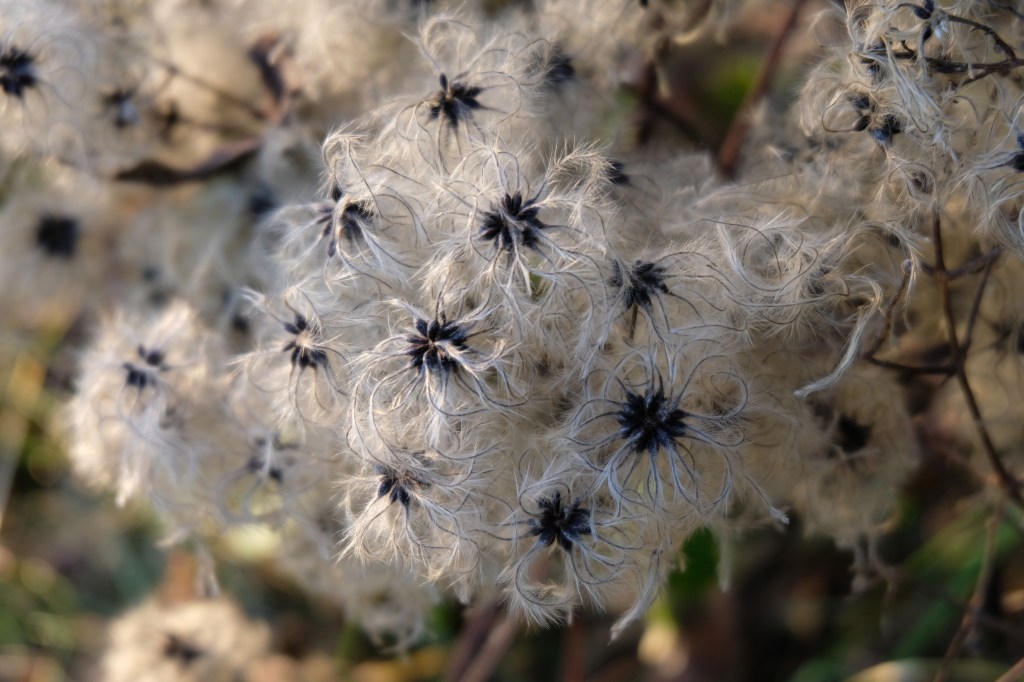
Photo credit: Sally Woodbridge
The common names of old man’s beard and traveller’s joy are so apt for the winter form of this wild clematis. The road home up from the broad valley to my childhood village in the beechwoods in the Chilterns was feather-edged with this plant as far as the enveloping arch of the trees. Goldfinches love the tiny seeds in the winter, listen for their lilting chirps. Moth larvae love to munch it in the warmer months.
Field Maple (Acer campestre)
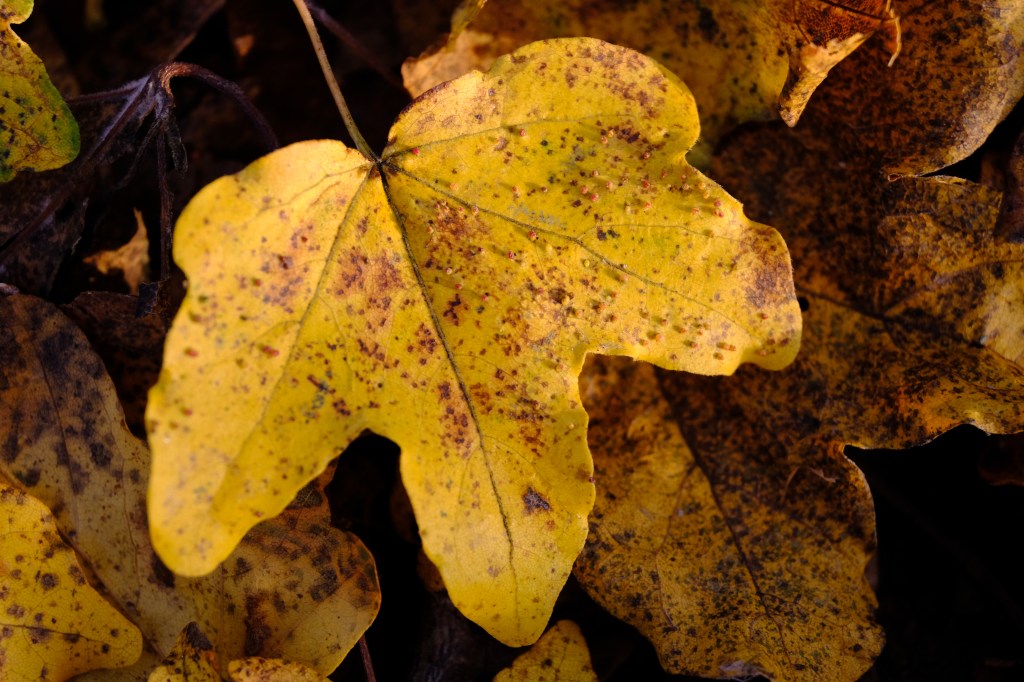
Photo credit: Sally Woodbridge
Look really closely at the fallen, golden field maple leaves. The low sun emphasises the pimples of the galls on the upper surface. The mites that inhabited them have gone now and the leaves and their shelters are decaying into the soil, replenishing its nutrients.
Lichen
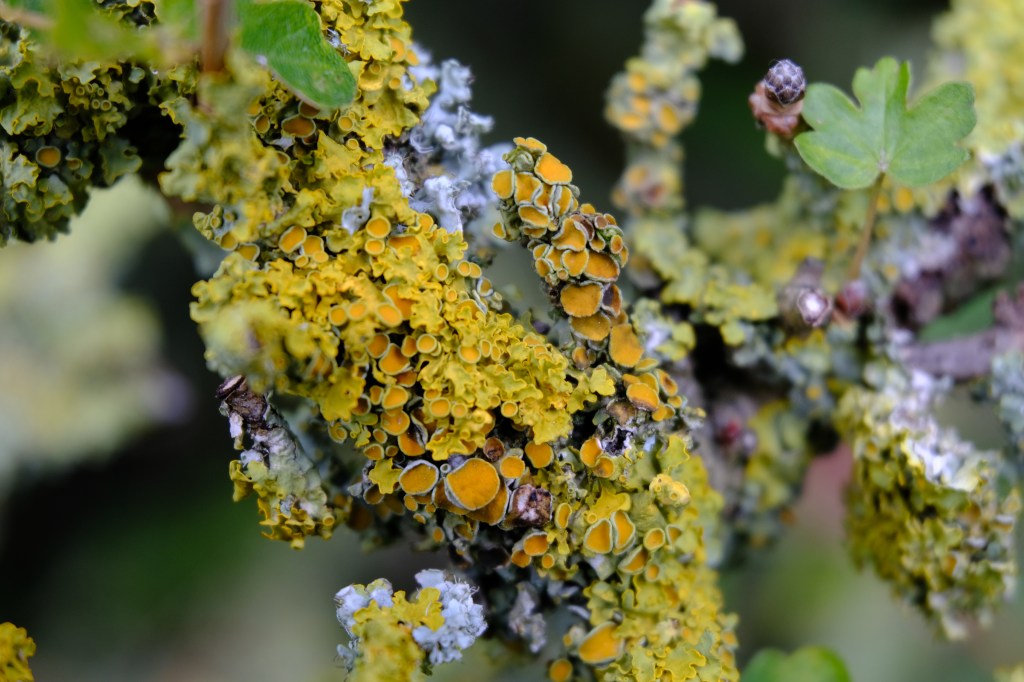
Photo credit Sally Woodbridge
Not a plant! Lichens are organisms that are a fungus and algae or cyanobacteria and usually a yeast as well. The fungus usually provides the structure and protection; the algae or cyanobacteria provide the energy through photosynthesis and the yeast helps to shape the outer layer of the fungus. They can grow really slowly and be really long lived. A map lichen (Rhizocarpon geographicum) in the Arctic is estimated to be 8,600 years old, the oldest organism on earth.
Common Cleavers (Galium aparine)
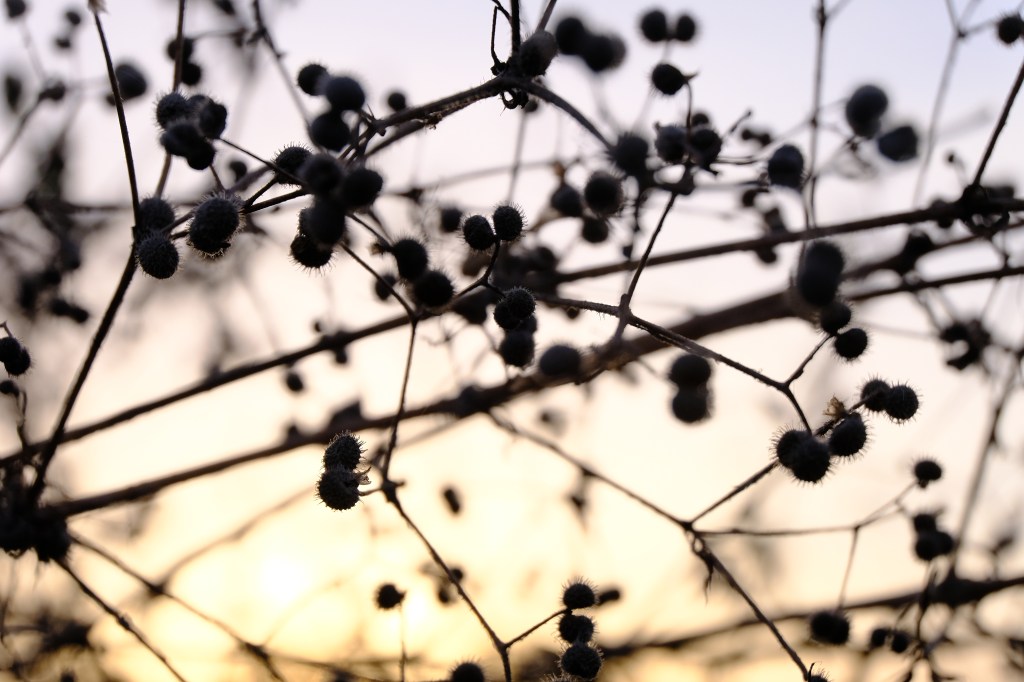
Photo Credit: Sally Woodbridge
What’s your name for these? We always called them sticky buds, but maybe you know them as goosegrass, hitchhikers or catchweed? Come the summer I will be passing on the family tradition of slapping tangles of green growth on the unsuspecting. Until then I’ll crouch down and contemplate the tiny miróesque silhouette of angular lines and spheres against the setting sun.
If you enjoyed this please enter your email address below to follow this blog and receive notifications of new posts by email.
 SallyW Outdoor Adventures