
“ I think we should both get rat-arsed.” Nick paused, his pint at his lips and slid his gaze sideways at me. What had turned Ms. Placid into an incipient alcoholic? Maybe everything gets turned upside down down under. Nothing so profound, it was just frustration and disappointment. We’d rolled up at Glenorchy, the leaping off point for New Zealand’s world famous Routeburn track, already braced with the knowledge that the unseasonally wet and cold weather would make it a tougher proposition than usual. What we’d not banked on was finding the track closed due to avalanche hazard. Our accommodation bookings, made by necessity back in September, might be cancelled and all our plans and preparations would be scuppered.
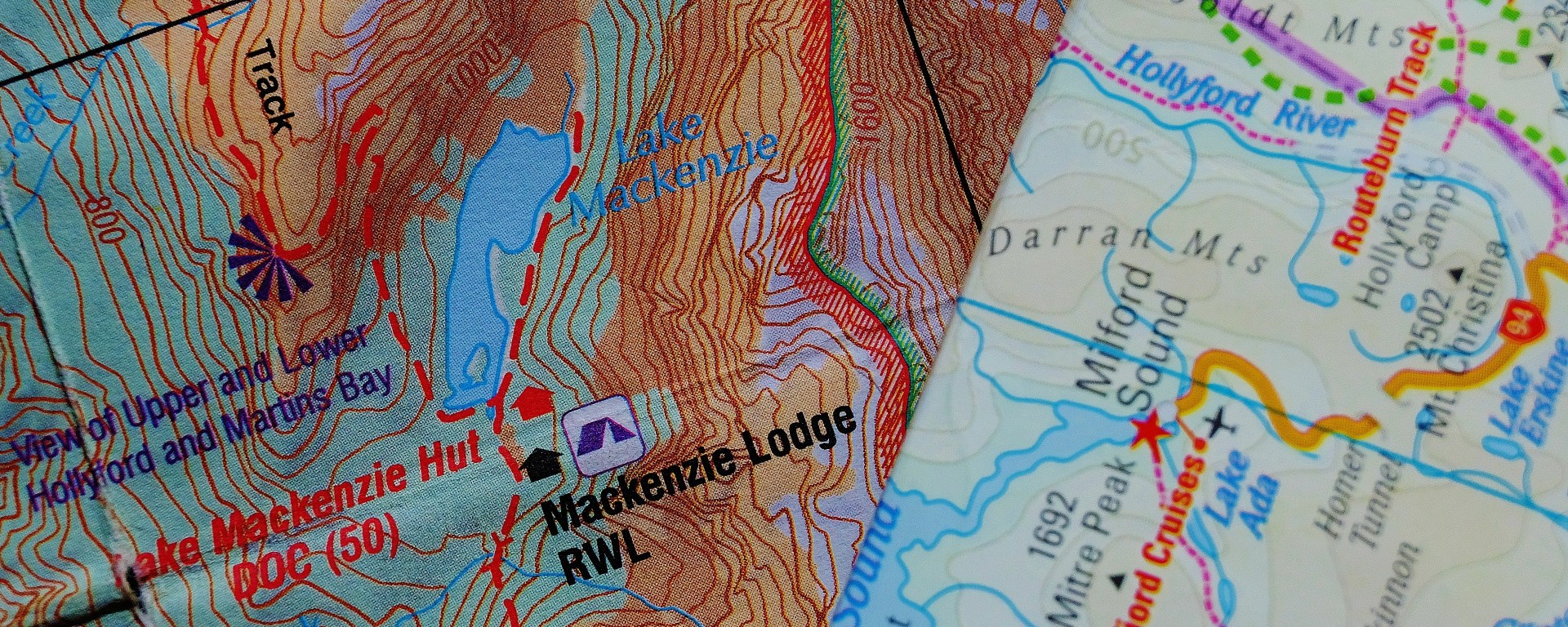
Denial is a great thing though. Returning to the kennel, an unlovely but cheap, warm and dry garden shed marketed as a chalet, we nonetheless readied our backpacks with sleeping bags, cooking equipment and four days’ food. Our optimism paid off and at just past 10am on Friday 1st December we boarded the minibus to start tramping the Routeburn. The plan was to follow the track from the start at the Routeburn Shelter and head westwards through the Humbolt and Ailsa mountain ranges via the Harris Saddle (1277m) to the Hollyford Valley. From there, just 35km east of Milford Sound, a stunning fjord of ‘Lord of the Rings’ fame, we would leave the Routeburn track and loop back eastwards over the McKellar Saddle Pass, following the less visited Caples track, and head south east along the Caples river to the shore of Lake Wakatipu, a short boat ride from our start point, Glenorchy. We would cover 56km in 4 days, crossing two 3,000ft passes and walking through red, silver and mountain beech forests, grassy river flats, orchards of mountain ribbonwood trees and alpine snow-tussock grasslands.
An assorted selection of long distance and day hikers alighted from the bus and began to wind their way on the wide, well-maintained tracks up towards the mountains. With only 8.8km and 500m height gain to cover, I dallied behind taking photos, whilst Nick raced ahead of the pack. We lunched together with the local tomtits on the grassy Routeburn river flats and continued to lighten our rucksacks with early afternoon snacks whilst sunbathing on the smooth, grey, glacier-scarred rocks alongside the crashing water of the Routeburn Falls. At 1,000m it wasn’t surprising that we felt cold once the sun had dropped behind the peaks, but the Routeburn Falls Hut was warm enough and had huge windows providing a wild view of beech woods dropping down to the criss-crossing lines of water in the braided river valley below.
We lunched together with the local tomtits on the grassy Routeburn river flats and sunbathed on the smooth, grey, glacier-scarred rocks alongside the crashing water of the Routeburn Falls.
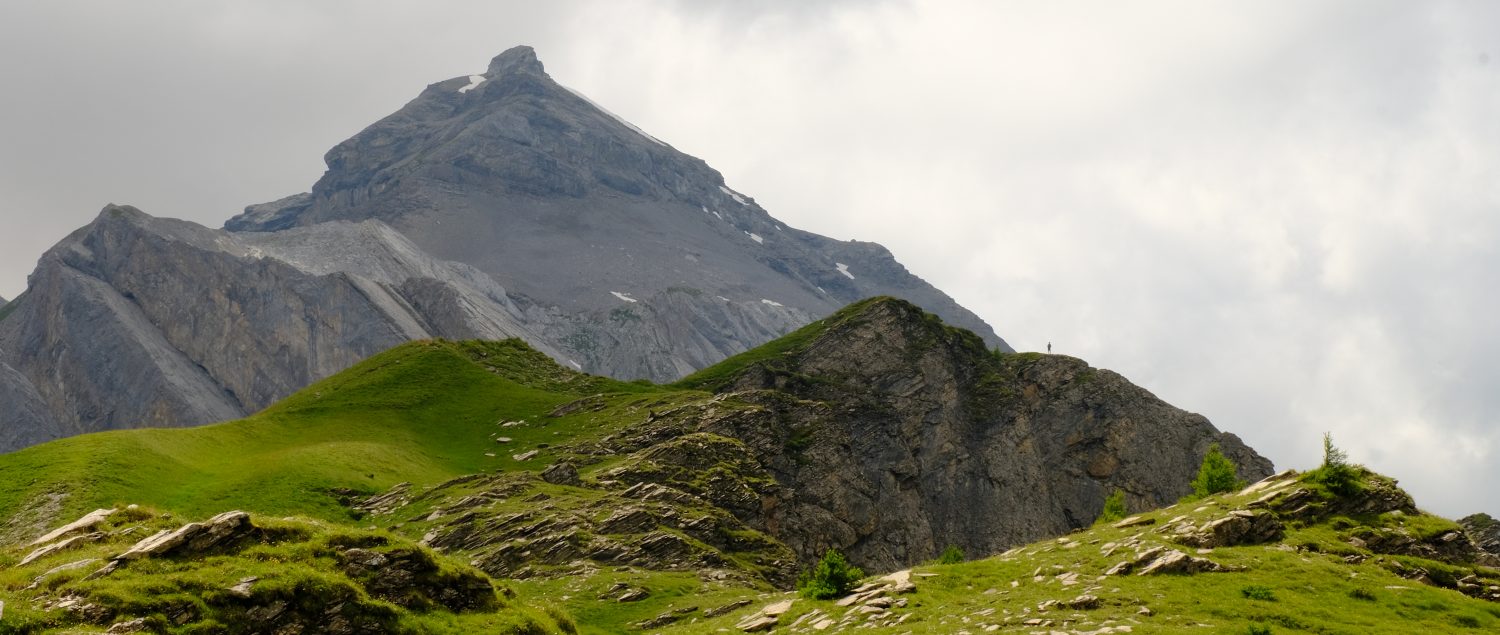
An earlyish start, pre-planned to avoid a large school group, resulted in an empty path and the privilege of being alone together in this alpine environment. The plants were fantastic: everlasting daisies, white gentians and the huge glossy green, leathery leaved white buttercups, the endemic Mount Cook lilies. The snow and the clear sky turned the lakes we passed into contrasts of diamond white and sapphire blue. After crossing the pass above Lake Harris we then headed south, over 1,000m above the Hollyford Valley, looking across dense woodland, man-made grass flats of the valley floor and the jutting outlines of the peaks opposite. Within four hours we were looking down on the varied greens of Lake McKenzie and, next to it, McKenzie Lodge.
The evening talk by the warden was funny and informative, no nationality escaped his observations, but we were quite relieved not to be Australians. He gave us a great insight into the effects of the introduction of non-indigenous species into New Zealand. For an island with no native mammals (apart from a couple of types of bat) the impact of mice, rats and stoats on the ground nesting birds has been devastating. Another major pest is the possum. Being nocturnal, the only ones we ever saw were roadkill. Dead is the preferred state for a possum in New Zealand. A conservation magazine at the hut enumerated the many and varied ways of despatching the beasts. One was a tree mounted trap that kills them as they put their head in to take the bait. There was an unintentionally amusing photo of a happy trapper standing next to a tree which was still being hugged by the obviously dead possum after it had been ‘whicked on the bick of the nick’ by this device.
Dead is the preferred state for a possum in New Zealand.
Day three was going to be a long one. We had to cover 21km and climb over the 945m McKellar Saddle with our large rucksacks. There was a worry as well that we might have to turn back. It had rained heavily all night and was still raining as we left the hut. The route information had warned about hazardous river crossings in these conditions. We doggedly set off, firstly above, then eventually along the bottom of the Hollyford Valley. We passed the vigorous Earland Falls and, interestingly, a very remote portaloo. The stream we had to cross was very slow flowing, but deep enough to take your boots off, roll your trousers up and feel the mud squidge up between your toes. The climb up to the saddle was wet, muddy and slippery, over tree routes and mossy boulders. It was quite a change from the manicured tracks of the Routeburn.
At the cairn at the top of the pass, four and a half hour after setting out, the clouds cleared and we nipped through the copious bogs on boardwalks with great views of the surrounding mountains. The next section down through the beech woodland and small stream crossings felt interminable though. We couldn’t rest for long as the sandflies, evil midge-like creatures, smelled us and hunted us down. There is a Maori saying that sandflies are the Gods’ method of ensuring that you don’t get lazy in paradise. As a work incentive it’s not very subtle. I can’t imagine introducing swarms of infuriating bugs, all trying to gnaw holes in you to lap up your blood would get past any trade union representative. Lack of bureaucracy is an obvious advantage for the omnipotent.
There is a Maori saying that sandflies are the Gods’ method of ensuring you don’t get lazy in paradise. As a work incentive it’s not very subtle.
When we arrived at the Upper Caples Hut it was unoccupied (except for a million of the vicious little blood drinkers) and un-wardened (any connection?). We did have company later, a solitary German lad turned up for the night. He had crossed over from the Greenstone Track on the Steele Creek Track. It was indistinctly marked in places in the dense rainforest and he’d cut his hand slithering down a slope, so companionship was very welcome. Plus he didn’t have to add a million little deaths to his conscience as Nick and I had exterminated the biting menaces residing in the hut.
The last day was an easy 15km plod down beside the widening Caples River, through beech forest and meadows. Flocks of lime green parakeets wheeled in and out of the trees and a herd of deer burst from the dappled trees and crashed through the river in a blinding white spray.
It was a relief to drop the rucksacks down in the car park at the end and snaffle the remaining emergency rations as we waited for the bus and water taxi ride back. It had been a fantastic route, full of contrasts; riverside meadows, rainforest, alpine flora, trickling streams, crashing waterfalls and silent lakes. Sometimes the landscape felt unnervingly familiar, like Scotland or the European Alps and then suddenly very alien, reminding us that home was half the world away.
Please enter your email address below to follow this blog and receive notifications of new posts by email.
 SallyW Outdoor Adventures