
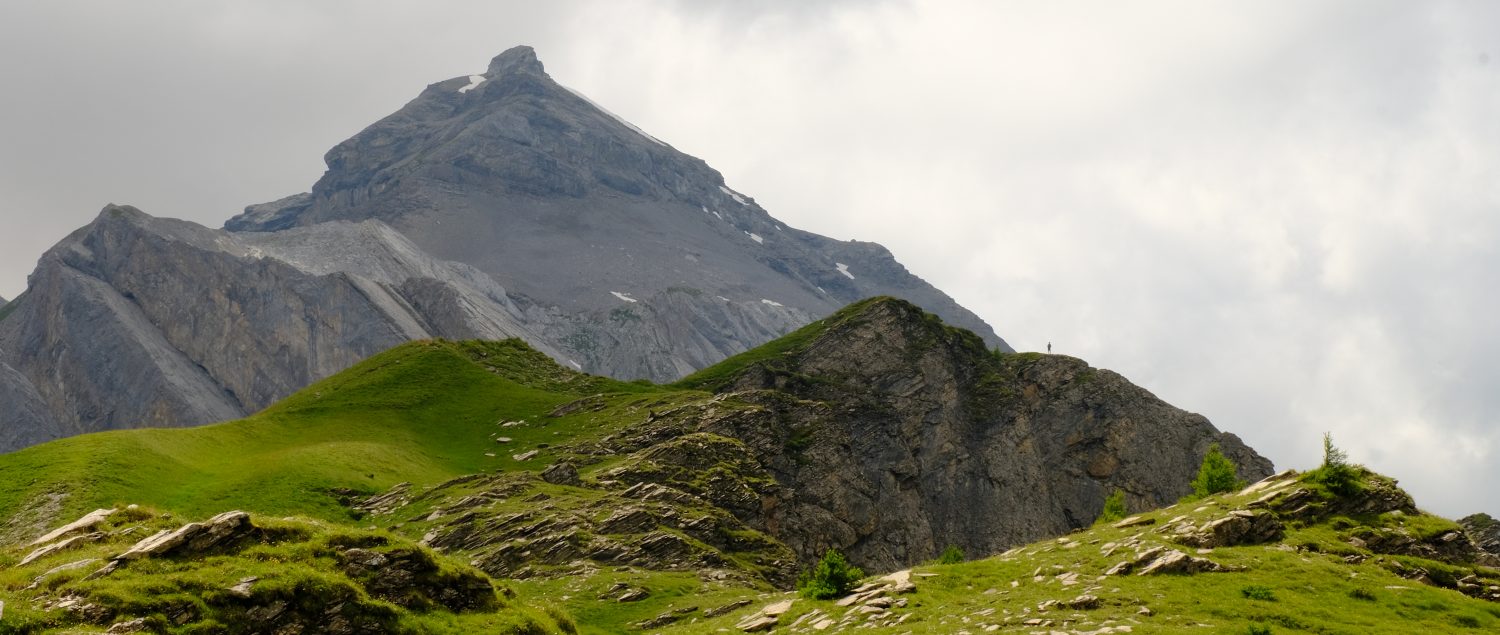

“Ne’er cast a clout ’till the May be out.” Growing up in the Chilterns I knew exactly what this meant, don’t stop wearing your winter vest until the hawthorn may (the flowers) can be seen. Looks like it’s time to chuck off our woolly undies!! Brrrr, you first!!
Hawthorn
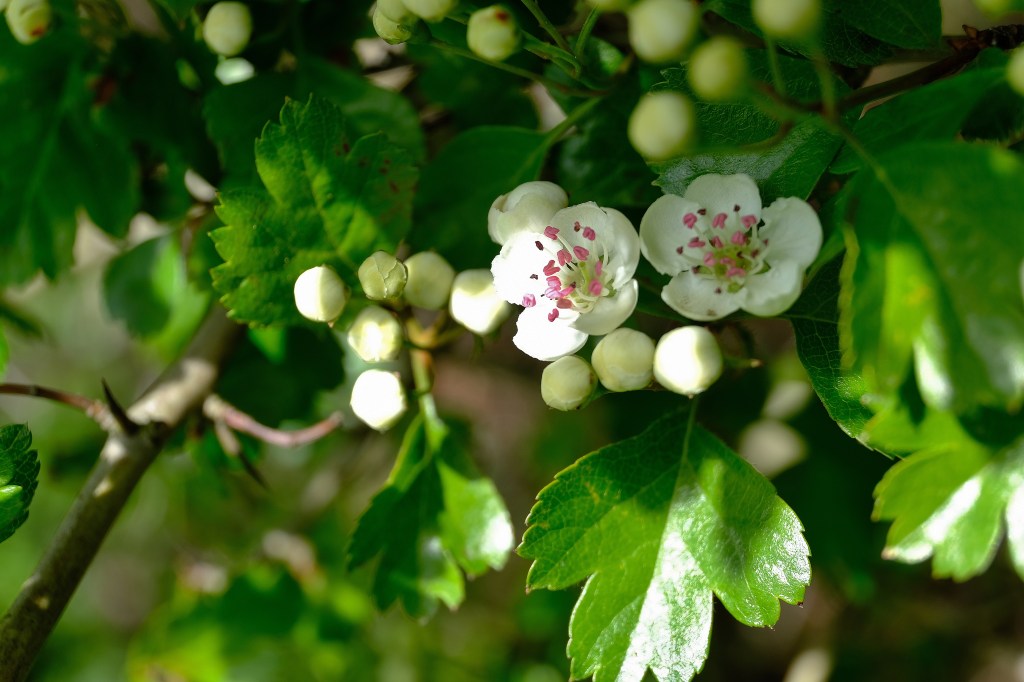
Photo credit: Sally Woodbridge
Hawthorn is easy to tell apart from Blackthorn because the leaves come out before the flowers (the may). The leaves, flowers and the berries (haws) are all edible. My mother used to call the little sprigs of young leaves ‘bread and butter’, maybe an old Chilterns name for them?
Jack-by-the-Hedge

Photo credit: Sally Woodbridge
No prizes for guessing where to find this one! Crush one of its leaves between your fingers and you’ll find out why it is also known as garlic mustard. Don’t worry about the juice left on your hands, jack-by-the-hedge is edible and has been detected on cooking pots over 6,000 years old.
Apple Blossom
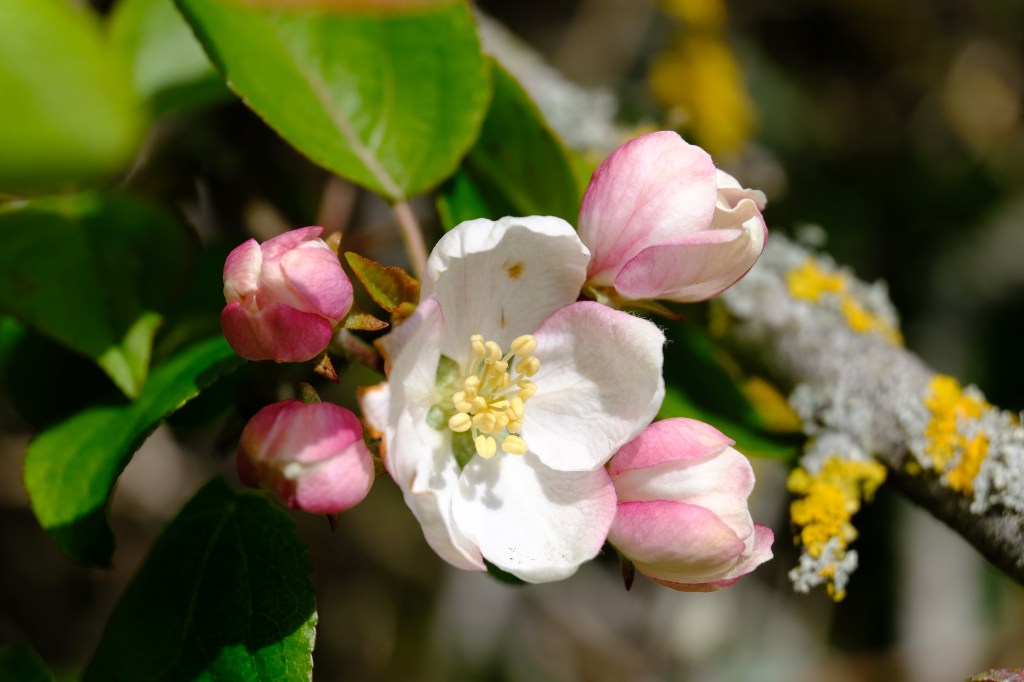
Photo credit: Sally Woodbridge
Our native apple tree is the Crab Apple, but the apples are incredibly bitter to eat raw. The apples we grow or buy to eat originated from the wild apple trees found in the mountains of Central Asia and Kazakhstan.
Yellow Archangel
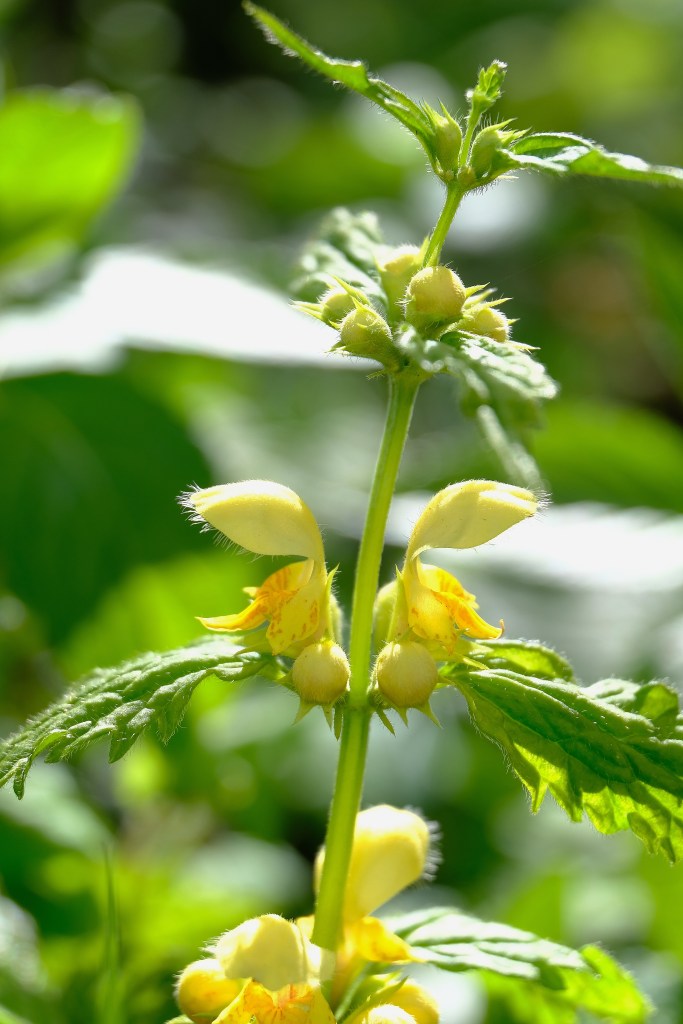
Photo credit: Sally Woodbridge
My favourite nettle! Doesn’t everyone have one? It doesn’t sting and despite it’s name, it is related to mint rather than stinging nettles.
Cherry Blossom
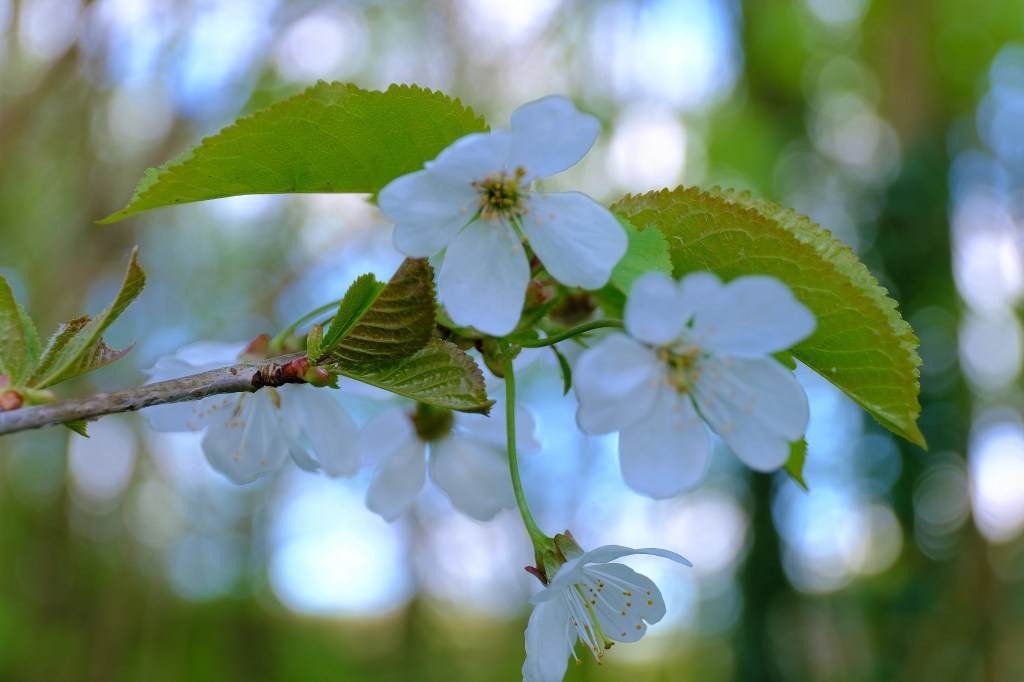
Photo credit: Sally Woodbridge
Top spotters tip: Look closely at the leaf stalk and if it is a wild cherry you will see two red glands near the top of it. Wild cherries provide fruit for mammals and birds in the autumn, but before then their leaves are food for the caterpillars of moths and butterflies.
Greater Stitchwort
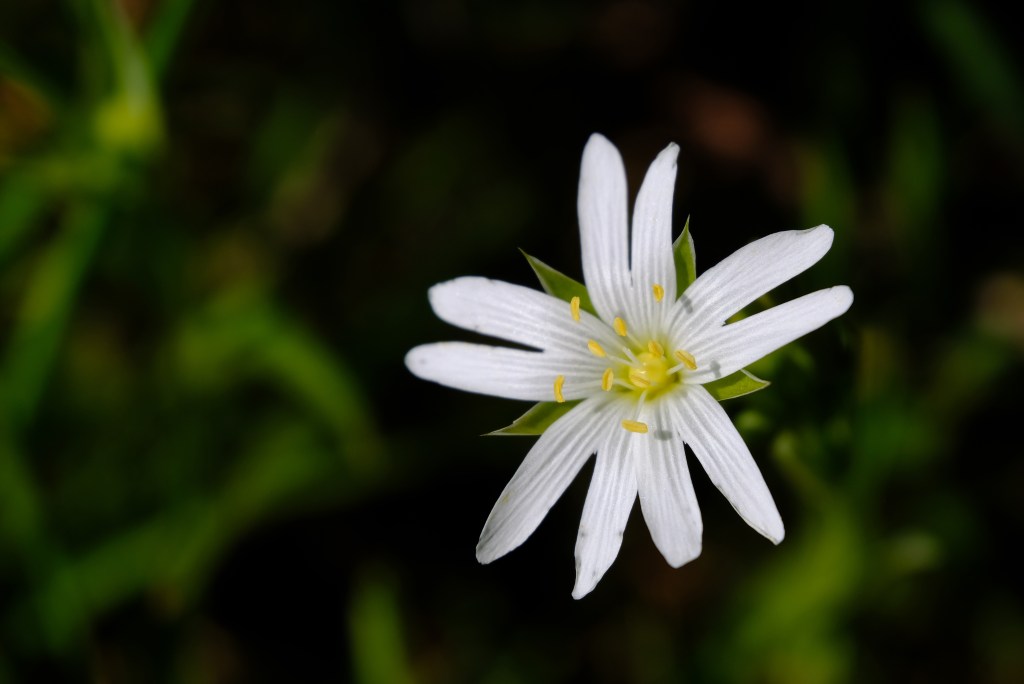
Photo credit: Sally Woodbridge
Many Old English plant names have ‘wort’ in them. This was usually given to plants that were useful, maybe even medicinal. There was also a belief that if a plant looked like a certain part of the body then it had healing properties for that area. These plants were called ‘worts’ as well. Sadly we now know that sometimes these plants were actually poisonous.
R. Fitter, A. Fitter and M. Blamey, Wild flowers of Britain and Northern Europe, 5th ed., Harpercollins Publishers, London, 1996.
ispotnature.org
Please enter your email address below to follow this blog and receive notifications of new posts by email.
 SallyW Outdoor Adventures