
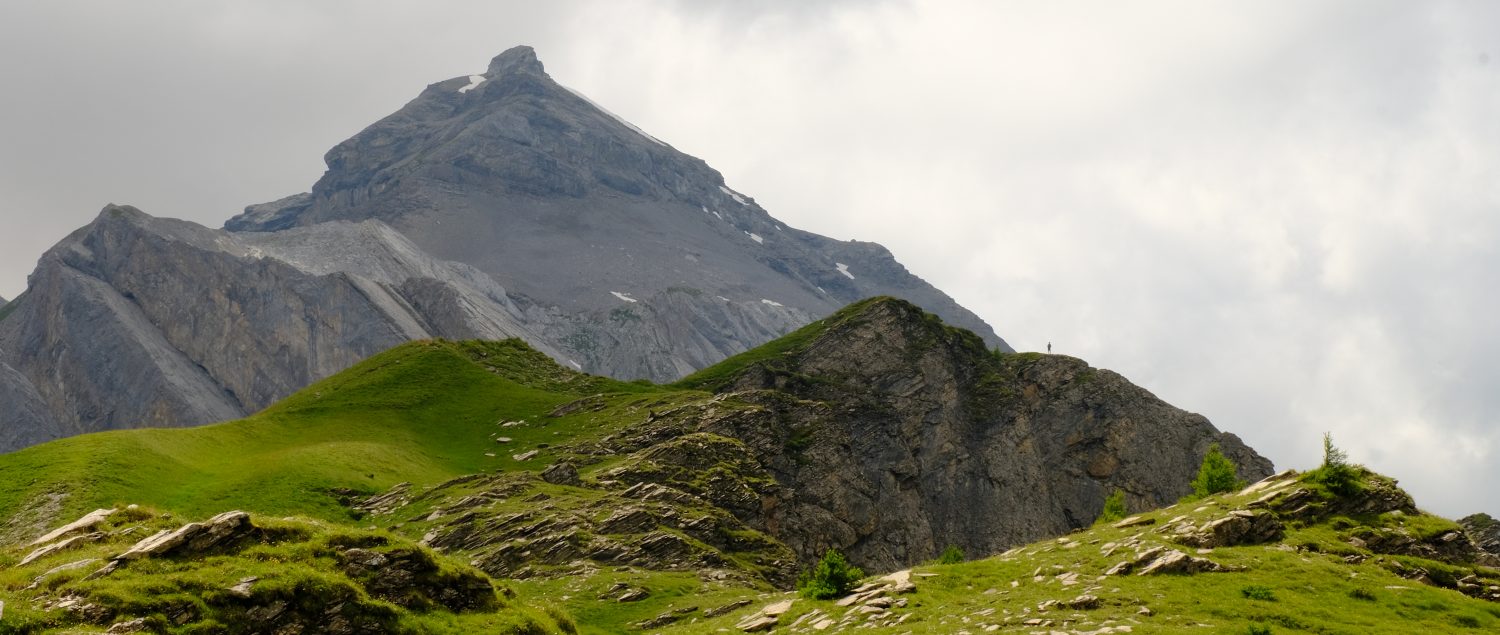

I put this kit list together for a trip to the Dolomites Alta Via 2 in July 2025. This is a 174km route linking a series of passes and mountain huts. It has 11,650m of ascent / 11,740m of descent, reaching a maximum altitude of 2907m and usually takes 13 days. After packing the absolute essentials, kit lists can include very personal decisions, honed over time. Here are a few considerations I made when compiling this one:
- We’re flying out and back and not leaving any luggage anywhere so there are no extras and no bulky hand luggage. Our rucksacks have to double as hold luggage and everything has to fit in them (including trekking poles).
- The Alta Via 2 traverses high, remote terrain. Some of the larger huts sell items such as suncream etc and there are some outdoor shops with limited opening hours on some passes but once the trail is started there is only one re-supply point for non-food essentials en-route (Day 5 at Malga Ciapela). Another re-supply opportunity is possible on the schedule planned, on the day off at Rifugio Rosetta, but this will involve a short walk and two cable cars to get to the town (these may not run in bad weather).
- We need to be prepared for all weathers, during five summers working in the Dolomites I saw everything from heat waves to body-shaking thunderstorms to black ice and snow.
- Water supplies on the Alta Via 2 are scarce, at most huts the tap water is not potable so drinking water can only be obtained by using a personal water disinfection system or buying bottled water. There is only one stream crossing en-route, standing water (e.g. lake water) should never be drunk. Showers are separately chargeable and timed.
- Charging tech is usually done on power points in communal areas with limited capacity and generators etc are usually turned off at night. Make sure your phone is easily identifiable and bring a lightweight powerbank. A headtorch will be necessary in huts after lights out (usually around 10pm).
Technical Equipment

Photograph: Nick Haine
Over half the stages of the Dolomites Alta Via 2 pass through areas described by the Club Alpino Italiano (CAI) as rough and / or treacherous terrain only suitable for expert hikers. Don’t expect to be able to detour around these difficulties once you have started the stage. In addition to the usual multiday trekking equipment you will each need to take a harness, Via Ferrata kit, helmet, gloves and microspikes (or crampons and an ice axe if there is late lying snow). You need the skills to use this equipment, to move through steep, loose, unprotected and potentially snowy terrain with confidence and to make appropriate decisions depending on the weather and yourself / your group. Be aware that sometimes you will need to cross 30-45 degree slopes above sheer cliffs on narrow paths or scree and there will be no fixed cables for protection, a slip could easily be fatal.
General Equipment
Photograph by Nick Haine
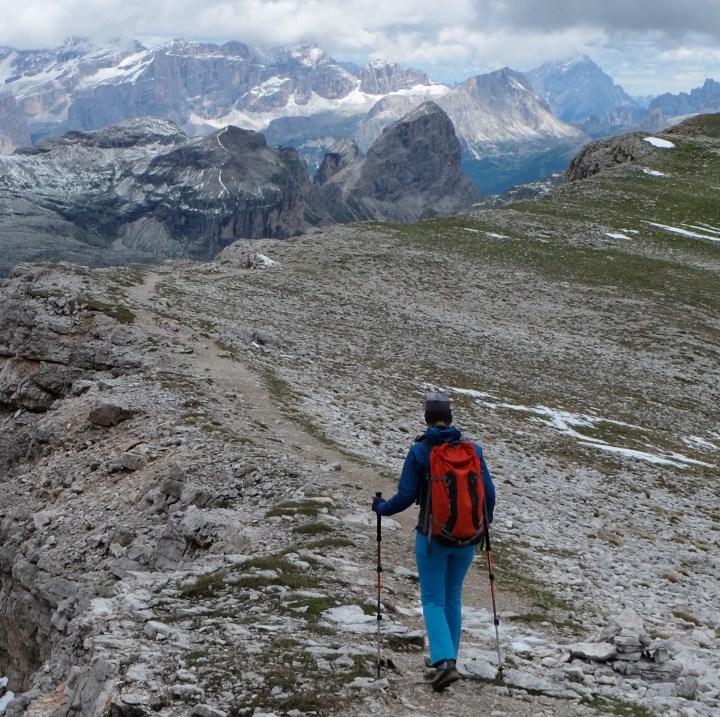
A Rucksack e.g. I’ll be taking my Deuter Guide 40 (+8) SL with a waterproof rucksack liner, a waterproof cover for the rucksack is optional. Trekking poles : Ensure these collapse small enough to fit inside your rucksack if you use it as flight hold luggage also take trekking pole tip covers and possibly snow baskets in case of late lying or early snow.
A 2 Litre minimum hydration system plus a spare 1 Litre hydration system bag or bottle that can be used separately. *Water disinfection tablets / liquids / filter or a water filter bottle kit ( eg Katadyn Be Free / Hydrapak seeker) can be used to save money / environmental costs of buying bottled water at huts.
A Sleeping bag liner, preferably silk due to weight and packsize, (required for sleeping in huts). Sleeping bag liner doesn’t seem to translate well from different languages, it is sometimes translated as sleeping bag on the hut websites.
Clothing and footwear
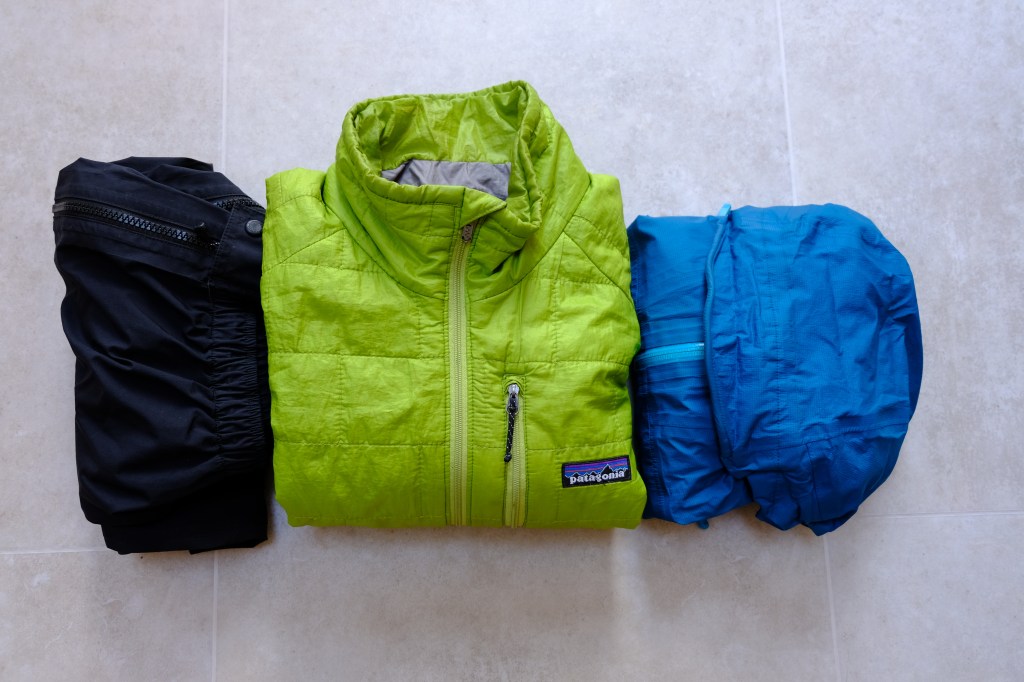
Photo credit: Sally Woodbridge
The above plus: Hiking boots (I prefer to use a stiffer pair of boots for scrambling / protected paths) plus sliders for use in the huts.

Photo credit: Sally Woodbridge
The above includes any travelling clothing unless you can leave a bag somewhere to collect at the end of the walk.
Gloves, hats etc

*Hiking Essentials
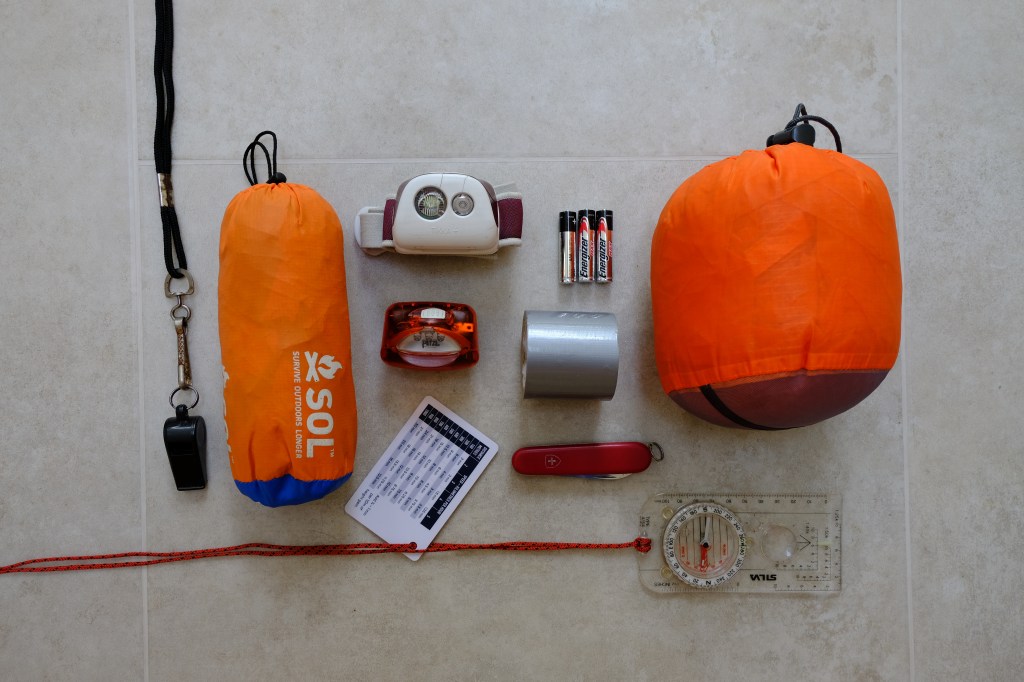
Photo credit: Sally Woodbridge
You’ll also need a guidebook and maps, preferably in printed format as well as electronic in case of low battery power. Also waterproof cases for these.
Toiletries
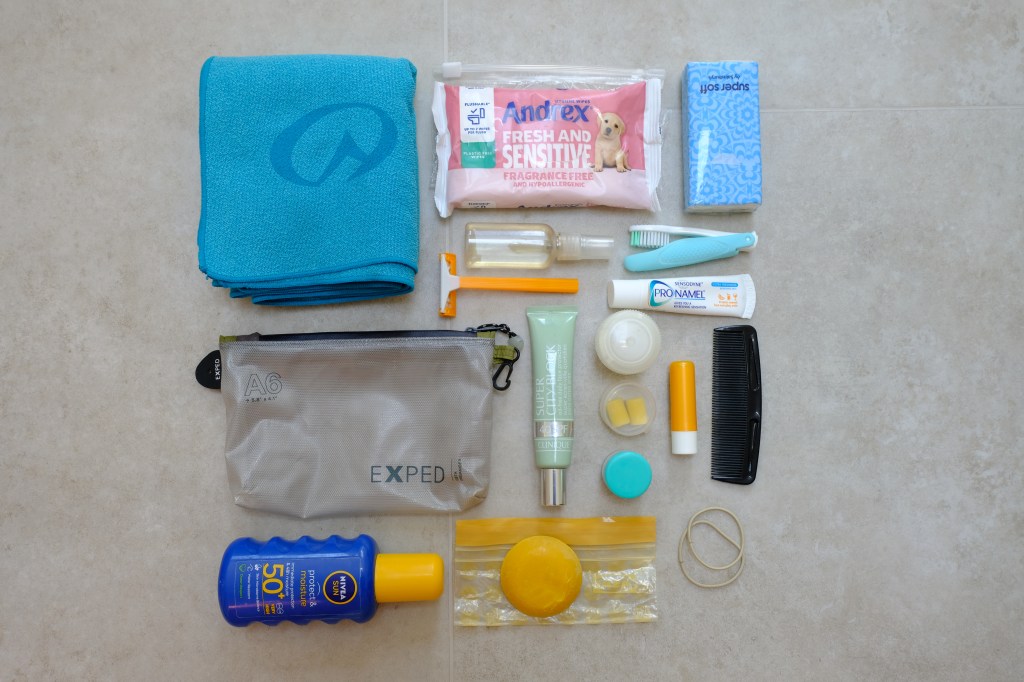
Photo credit: Sally Woodbridge
*First Aid Kit (and the knowledge of how to use it)
Disposable gloves (minimum 2 pairs), Small rubbish bags for used antiseptic wipes etc (e.g. dog poo bags), Dispersable asprin, Rehydration salts (individual sachets), Blister plasters (different sizes), Plasters, Roll of plaster tape, Wound dressings, Antiseptic wipes, Triangular bandage, Crepe bandages, SAM splint, Strong scissors, Tick remover, Tweezers.
Plus
Paracetamol, Ibuprofen, Sudocrem, Anti-histamines, Voltarol, Insect repellent (only necessary on the last evening) plus any personal medication.
Travel Essentials
Passport, GHIC card (UK citizens’ post-Brexit equivalent to the EHIC card), Alpine Club card (e.g. UK citizens can join the Austrian Alpine Club)- the AAC will give you reciprocal rights discounts at some of the mountain huts and mountain rescue insurance. Credit / Debit card(s), Euros (many mountain huts cannot accept card payments due to lack of mobile signal, there is only one ATM on the route so take enough cash). Printed flight / train etc tickets, *printout of itinerary including confirmation emails for hut bookings, contact numbers for huts, accommodation etc. *Waterproof document case for above.
Prescription / reading glasses if necessary with a hard case to protect them.
Food
Trail mix, Sugary sweets or Cliff shots or equivalent, re-sealable food bags to carry packed lunches in.
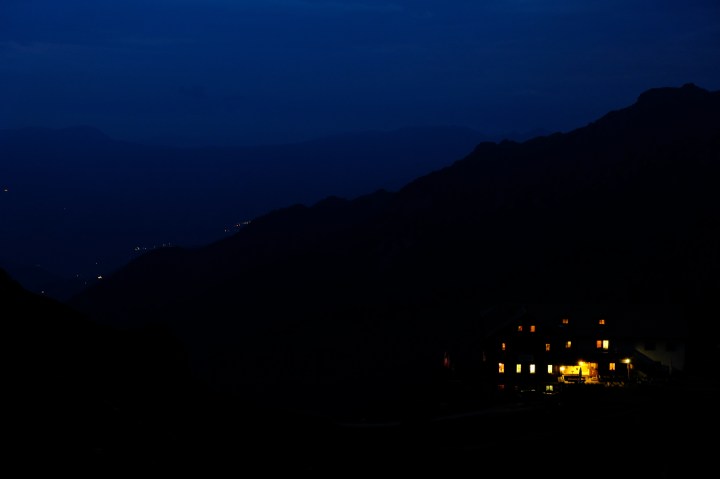
Photo credit: Sally Woodbridge
Tech
Plug adaptor, Mobile phone – preferably a smart phone so weather forecasts and online bus timetables can be checked. Before starting the trek ensure that the battery life of the phone is optimised. Mobile phone waterproof case, mobile phone charger cable. Powerbank (it may be difficult to charge your tech at smaller mountain huts especially if they are busy or use generators (usually turned off at night). Powerbank charging cable. GPS / Watch plus charging cable(s). Camera, spare camera battery, camera battery charger and camera case (all optional).
Luxuries (optional)
Book, notebook and pen, lightweight games eg. a pack of cards, yahtzee, pass the pigs
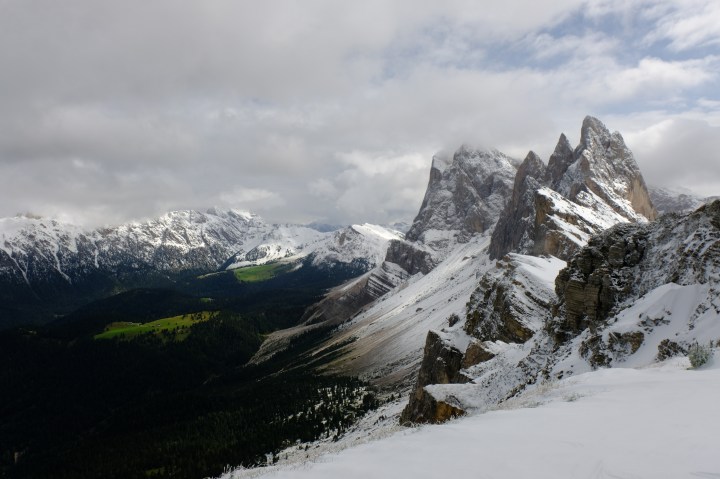
Extra kit required for early summer season i.e. June, later autumn treks i.e. late September / October or years with late lying snow
Photograph by Sally Woodbridge
Snow baskets for trekking poles, snow gaiters, lightweight trekking ice axe, crampons and crampon compatible boots.
Final thoughts
An * denotes group kit. If there is any chance the group will decide to split up on a mountain day carry another set of group kit to ensure everyone has access to navigation equipment and hardcopy maps, a first aid kit and itinerary information at all times.
I find packing different categories of kit into different colour stuff sacks helps me locate stuff quicker, this could be very useful in case on an emergency.
Please remember that outdoor activities like walking come with inherent risks. The author has endeavoured to make the information as accurate as possible at the time of writing but the decision to undertake the walk is entirely at your own risk. No responsibility can be accepted for any kind of physical injury, loss or damage to you or your property.
If you enjoyed this please enter your email address below to follow this blog and receive notifications of new posts by email.
 SallyW Outdoor Adventures