
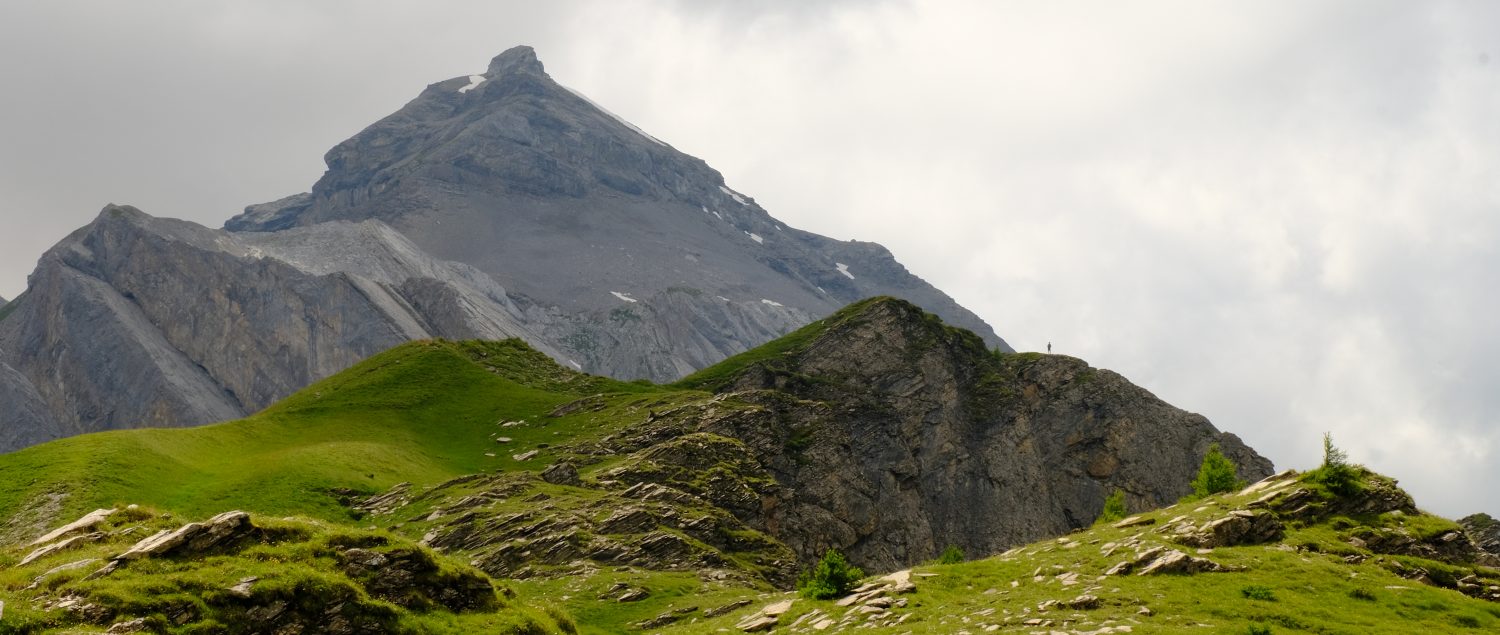

We can drink in the rich autumn colours in our hedgerows while the bees sip the last nectar from the ivy flowers. But beware, poisoned berries lurk here too!
Field Maple (Acer campestre)
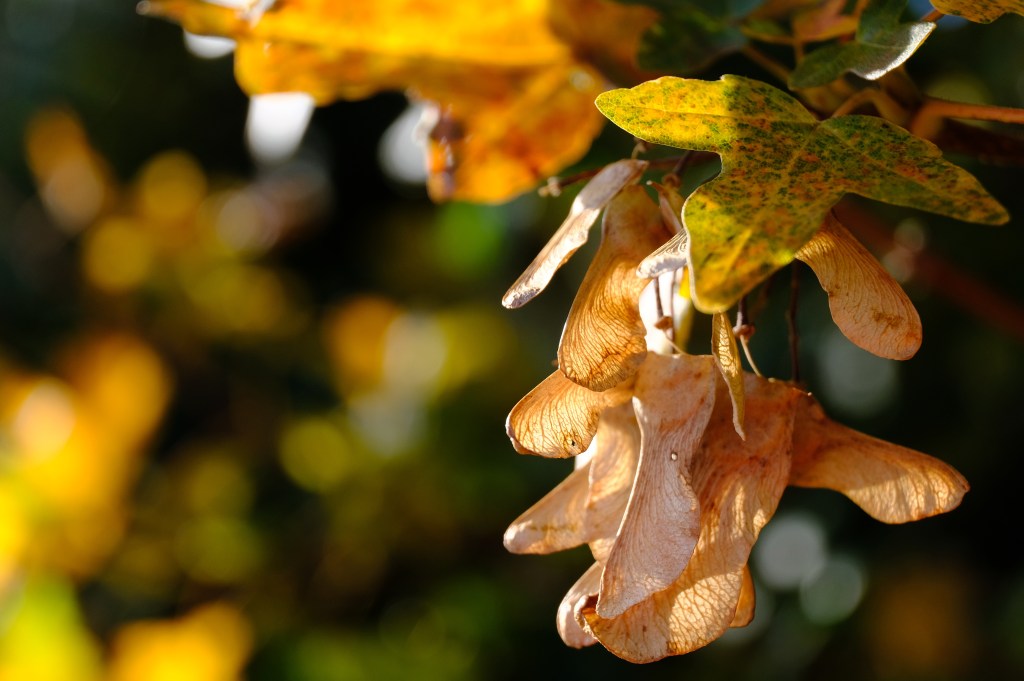
Photo credit: Sally Woodbridge
Field maples are ablaze with autumn colour now. Our local hedges are shimmering with their distinctive lobed golden leaves. They are dripping with seeds, two fruits form the centre of two wings that are horizontal before they dry out. They are called samara. Pick one of these paired samara, throw it in the wind and watch it twirl away.
Ash (Fraxinus excelsior)
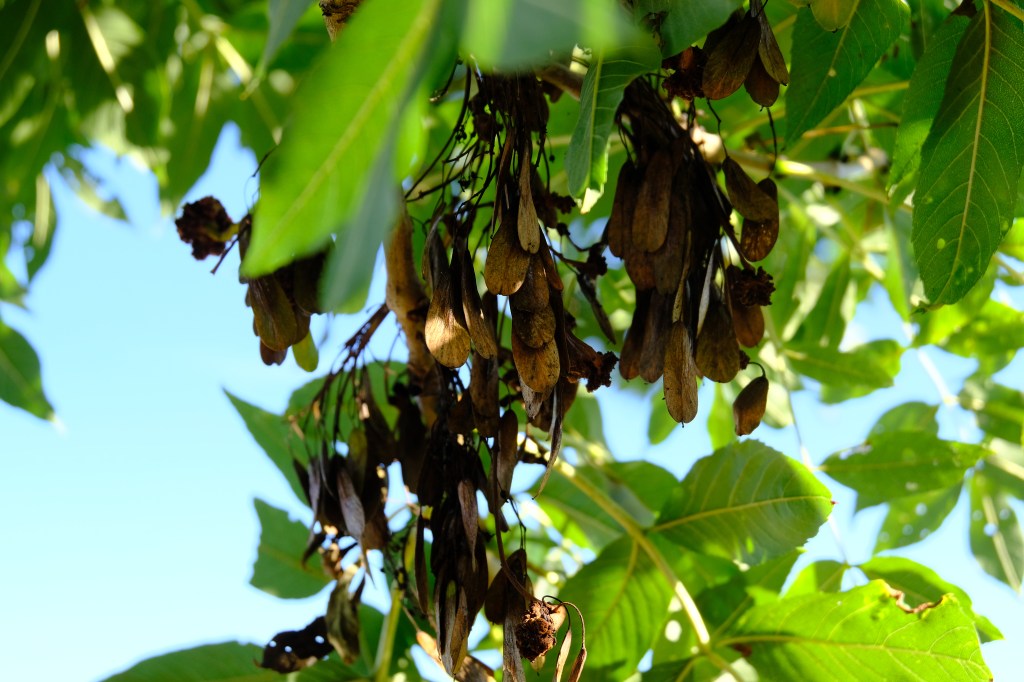
Photo credit: Sally Woodbridge
Ash fruits are usually known as ‘keys’. These are one winged samara and dangle in large bunches from the trees. Grab some, chuck them up in the wind and watch them swizzle down. Notice any difference to the way the Field Maple fruits flew?
Spindle-tree (Euonymus europaeus)
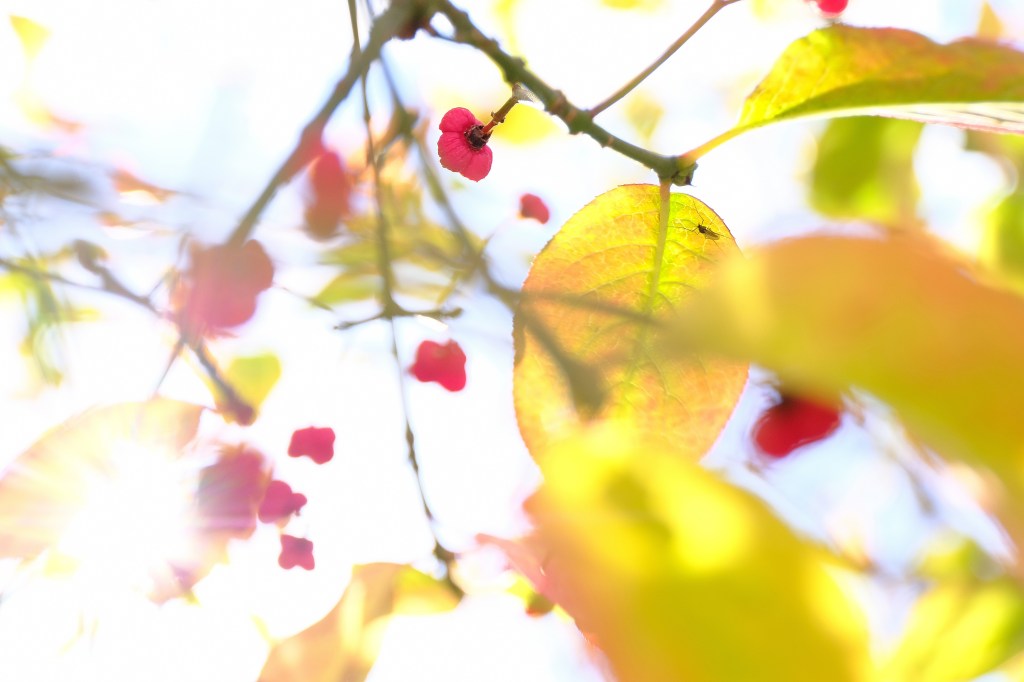
Photo credit: Sally Woodbridge
The Spindle-tree is so exotic looking with its coral pink fruit with a bright orange seed. Amazingly this is a native tree, we’ve got lots in the hedges along the far end of the Plumpton End road. Beware though, the fruits might look like sweets but are very poisonous!
Pedunculate Oak (Quercus rober)
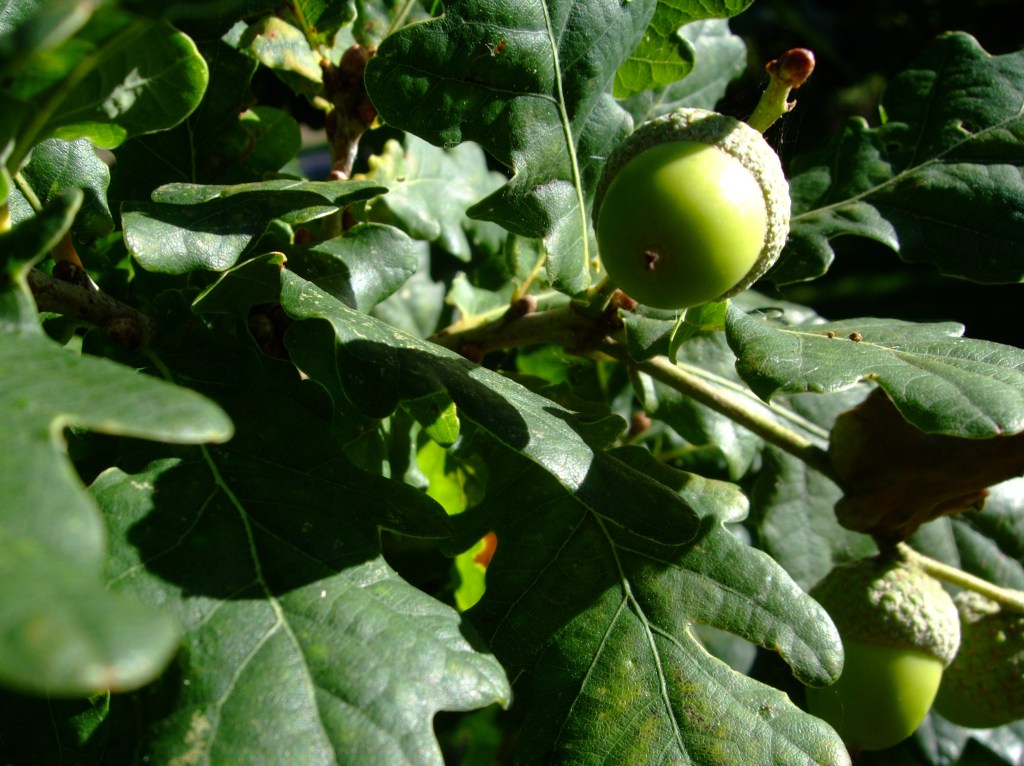
Photo credit: Sally Woodbridge
This is the English Oak. The nut (acorn) grows on a long-stalked, scaly cup. This photo is of the gorgeous tree at the end of the Park Farm road a few weeks ago. I couldn’t see any acorns yesterday. Maybe the squirrels have eaten or buried them all? Or maybe the secretive Jays? Eurasian Jays don’t damage the acorns as much as squirrels do, so those they fail to eat are more likely to grow. Oak trees can be incredibly long-lived, there are oak trees in Europe that are 1,500 years old.
Woody nightshade (Solanum dulcamara)
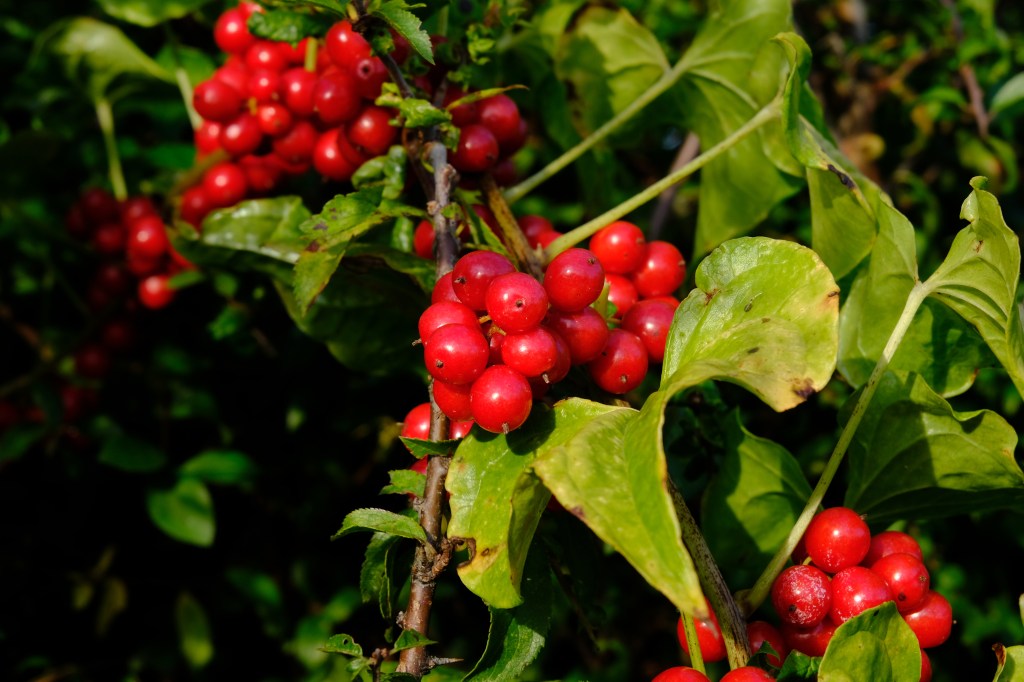
Photo credit: Sally Woodbridge
Woody nightshade forms festive red twisty garlands through our hedgerows. Keen allotmenteers might see some similarities with their beloved potato crops and tomatoes, they are related. But danger, danger! Woody nightshade’s red berries are poisonous.
Ivy (Hedera helix)
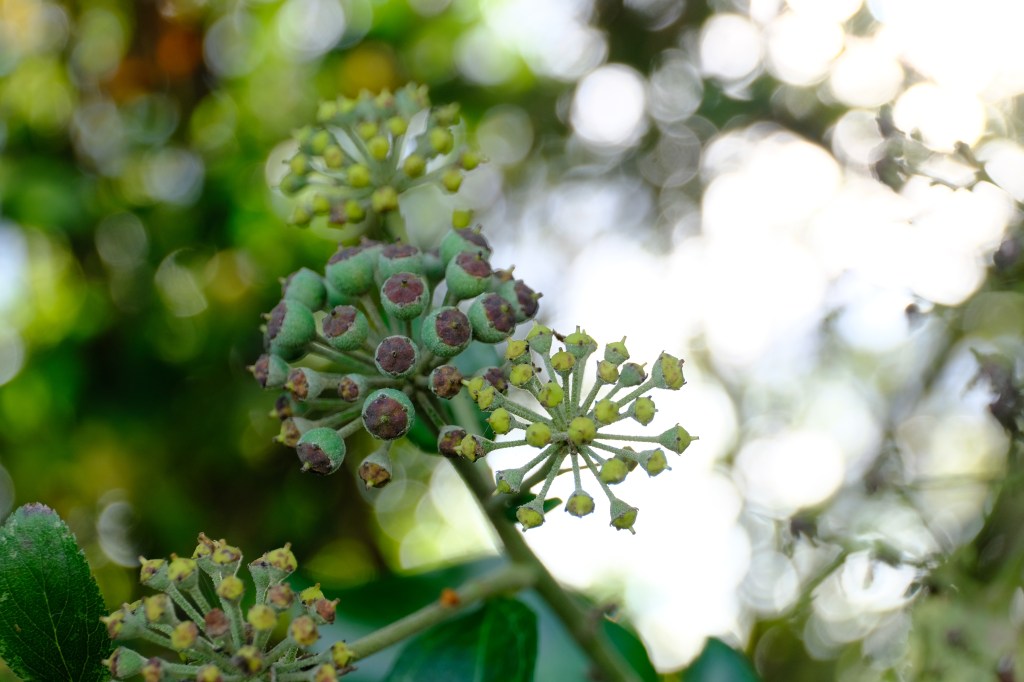
Photo credit: Sally Woodbridge
I love ivy, it’s an unsung wildlife hero. It is just finishing flowering now, the nectar has been welcome late autumn food for bees and other insects. My photo shows the black berries starting to develop, these will be food for our local birds in the cold of winter.
If you enjoyed this please enter your email address below to follow this blog and receive notifications of new posts by email.
 SallyW Outdoor Adventures