
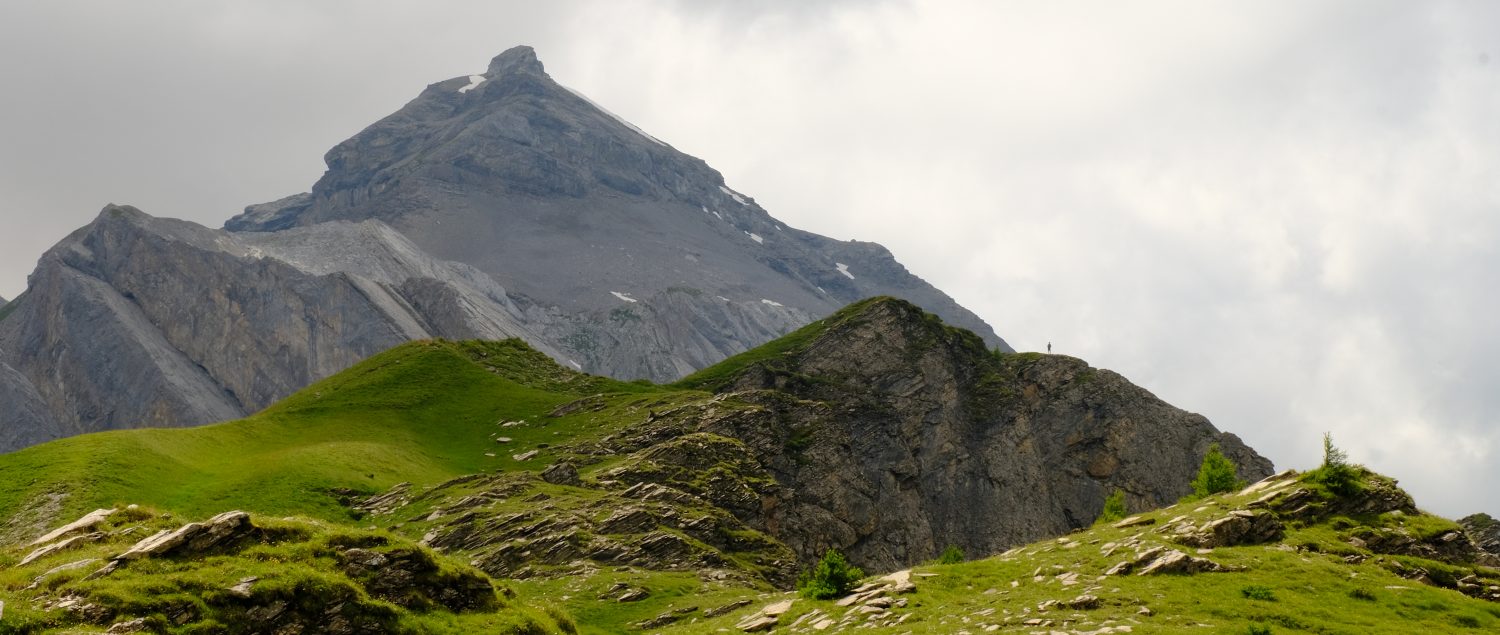

Is your back aching from snuffling around in the undergrowth looking for tiny flowers? Stand up, throw your shoulders back and gaze straight at these tall summer stunners.
Meadowsweet
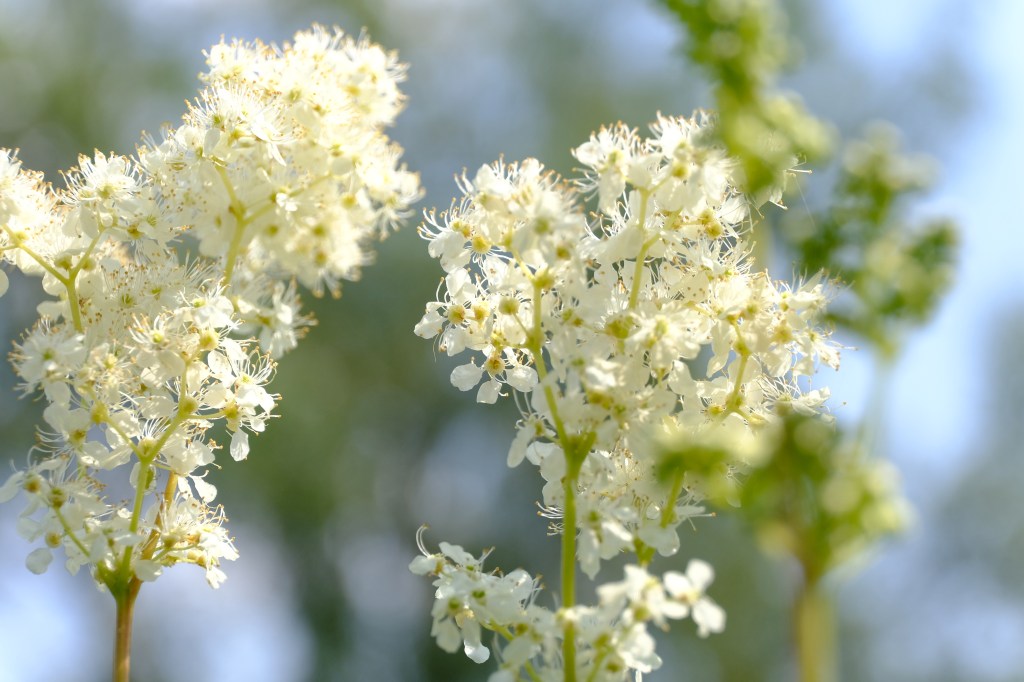
Photo credit: Sally Woodbridge
Tall, willowy and fragrant you can find Meadowsweet filling the stream through the Warren and by the damp edges of hedges. Get close and breath in its sweet elderflower-like scent. Meadowsweet used to be gathered as a strewing herb. When house floors were just compacted earth topped by rushes or straw, strewing herbs such as meadowsweet were laid on top to make the rooms smell better. Some of these strewing herbs also had natural insecticides for killing some of the resident bugs!
Great Willowherb
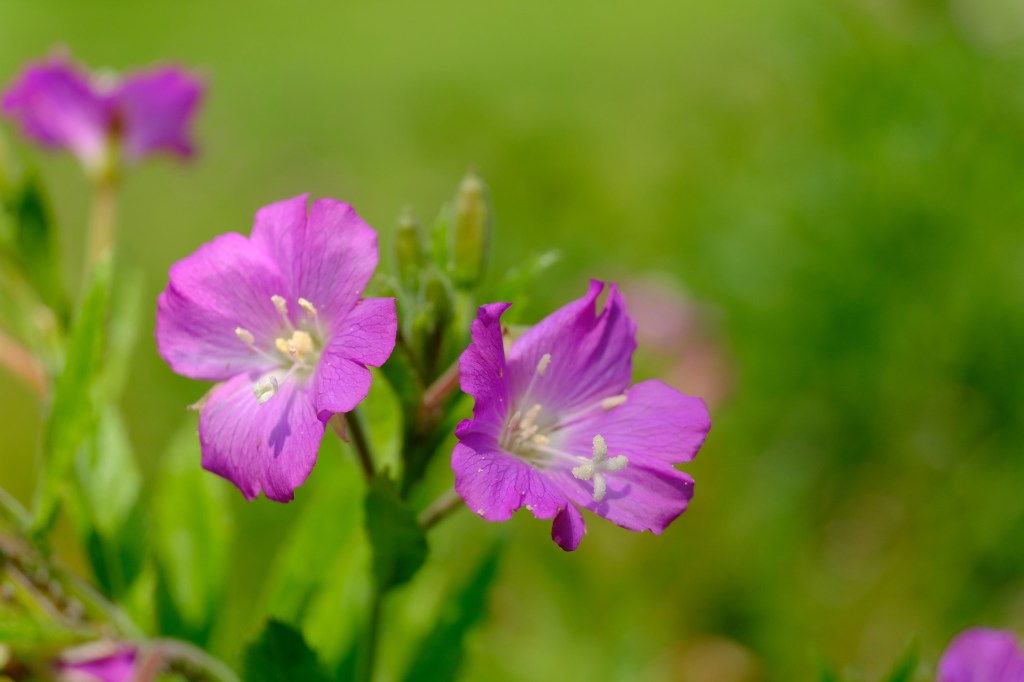
Photo credit: Sally Woodbridge
“That’s not a Willowherb” I said confidently when I first saw this plant locally. Wrong! I was used to seeing the tall, pointy, pink, flower pyramid of the Rosebay Willowherb on the dry chalk slopes of the Chilterns. By the stream in the Warren and in damper soil by the hedgerows the tall Great Willowherb thrives. Look for the distinctive four prongs of white stamen that poke, stalk-like, from the centre of the flower (seen on the righthand flower in the photo). Run your hands gently up the stems and leaves to feel it’s soft hairiness.
Meadow Cranesbill
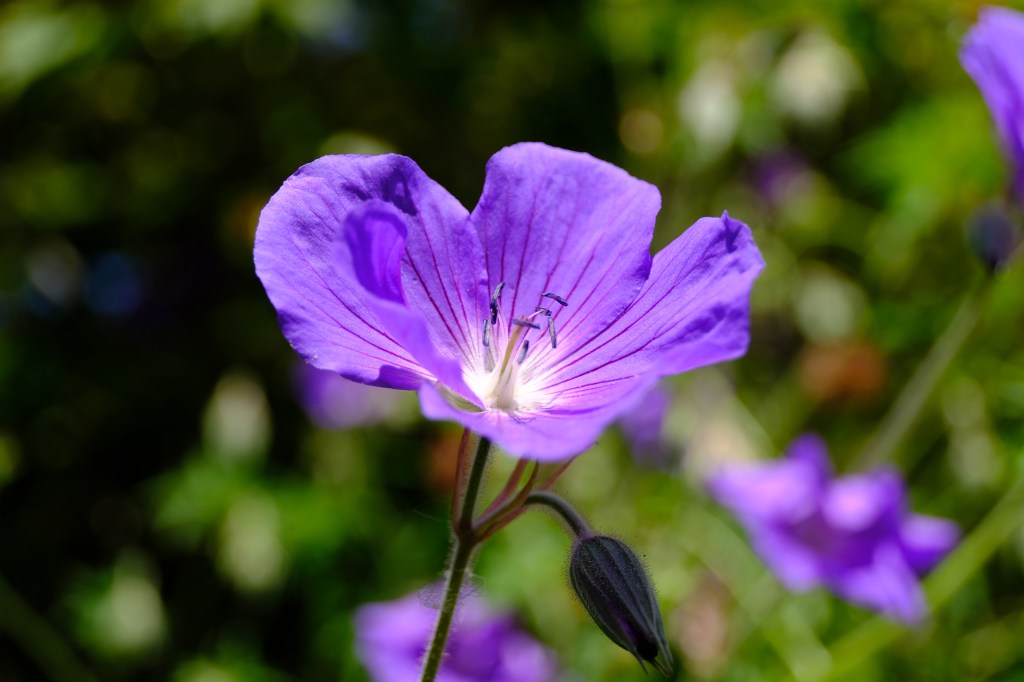
Photo credit: Sally Woodbridge
The Meadow Cranesbill isn’t quite as tall, but the purple / blue flowers will catch your eye. The flower bud at the bottom of the photo is the same shape as the coming seed head that has a long straight ‘beak’ poking out. It looks like a Cranes beak (or bill). Cranes used to be common British bird. The Archbishop of York was served a dinner with 204 roasted Cranes in 1465! In 1979, after an absence of 400 years, a trio of Cranes began breeding in Norfolk. Cranes (and their bills) are back.
Tufted Vetch
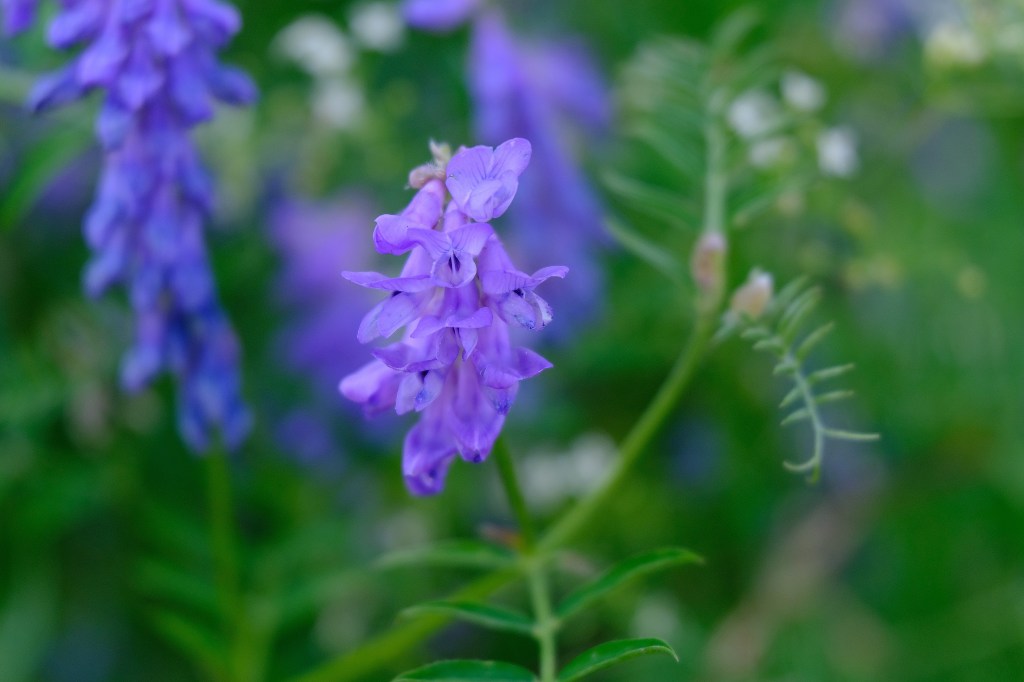
Photo credit: Sally Woodbridge
You’ll find this plant clambering high through hedges and bushes. Stop when you see some and listen. What can you hear? Hopefully a buzzing hum, bumblebees love Tufted Vetch flowers!
Birdsfoot Trefoil
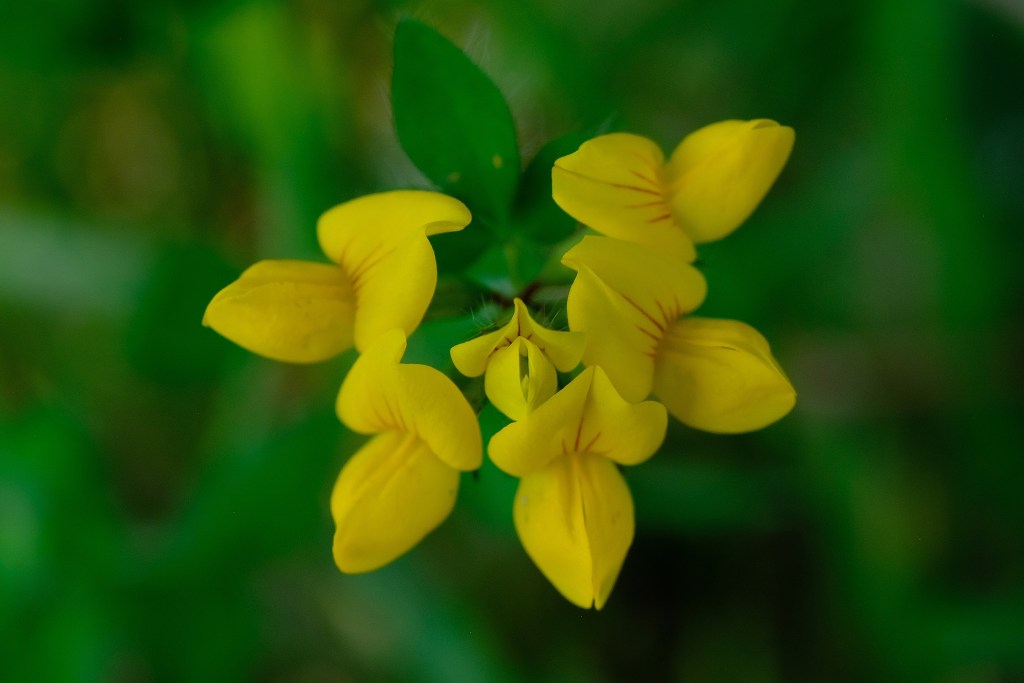
Photo credit: Sally Woodbridge
Time to shift your gaze downwards for the last two flowers. Find a Birdsfoot Trefoil and look at the leaves. The lowest two leaves bend back, making the top three leaves more noticeable. Hence the name Tre (three), Foil (leaves). The seed pod also helps form the name. The seedheads curl down like birds’ claws, Birdsfoot!
Self-Heal

Photo credit: Sally Woodbridge
Self-Heal can be found across Europe, Asia, Africa and North America. As the name suggest Self-Heal, also known as heal-all and woundwort, has been used as a medicinal plant for centuries by many different cultures across the world.
If you enjoyed this please enter your email address below to follow this blog and receive notifications of new posts by email.
 SallyW Outdoor Adventures