
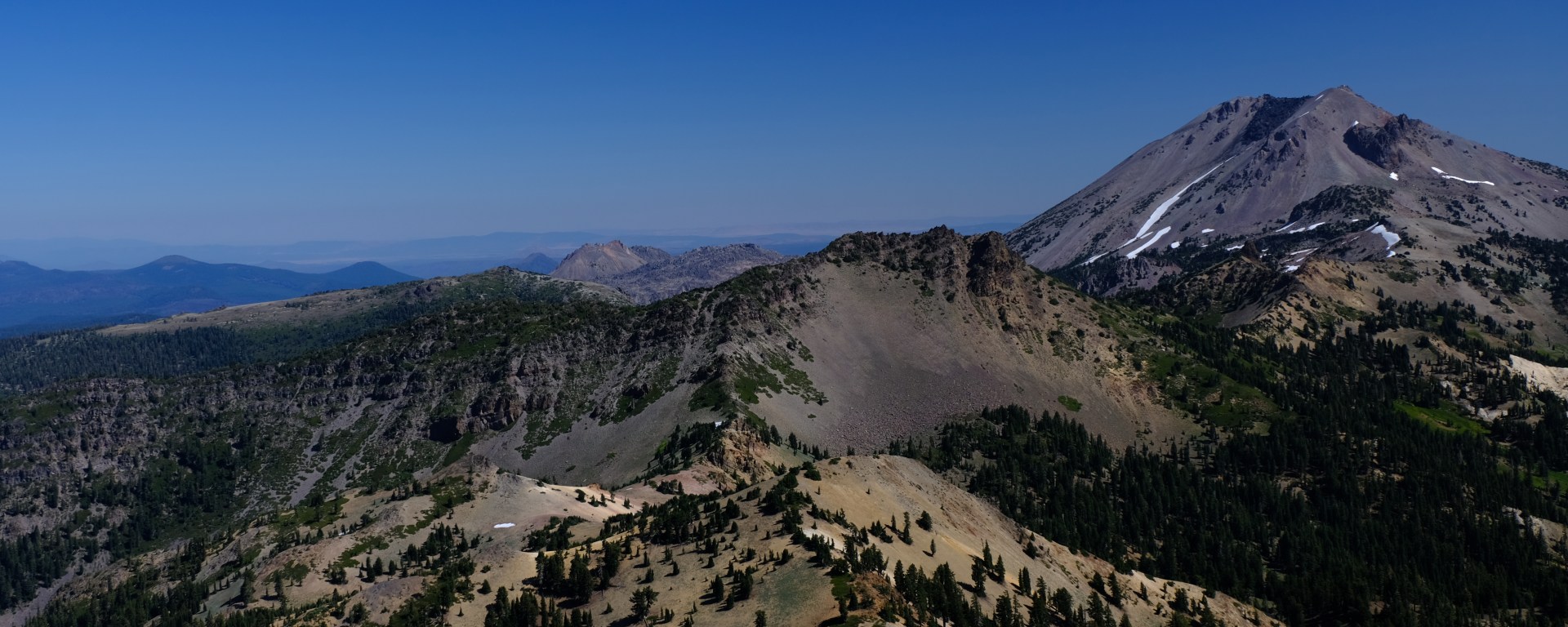
Let the adventure begin. Chaos Crags, Bumpass Hell, black bears, mountain lions and potential wild fires all failed to dissuade us from camping in Lassen Volcanic National Park, Northern California last August. The park only measures 10 by 15 miles but packs in all four types of volcano (who knew?), 150 miles of hiking trails including a 17 mile section of the iconic Pacific Crest Trail, and over 745 different species, including the aforementioned large mammal and apex predator.
Amazingly though, Lassen southwest campground was one of the most chilled experiences of my life. Set on a hillside, above a gurgling brook, snuggled between conifers, the small campsite oozed calm. Pine needles muffled every footstep and at night. Through the tree gaps, the diamond film of the Milky Way slicked across the sky. Enough of this idyll though, incredible backcountry hiking beckoned. Bumpass Hell was shouting our names.
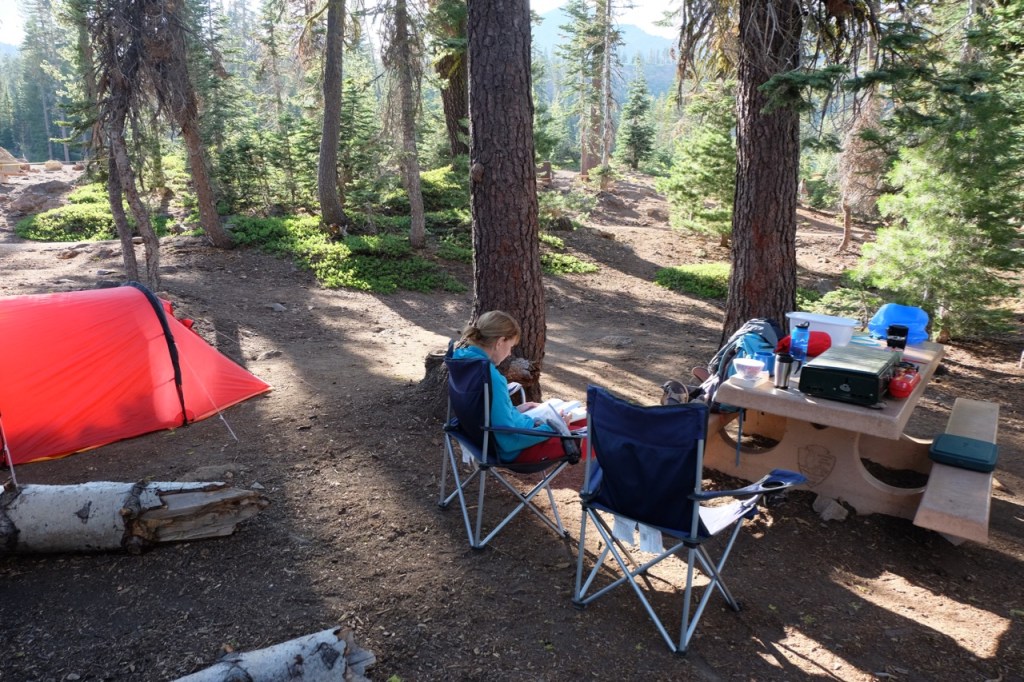
Photo Credit: Nick Haine
Our journey to Hell was a long one. Path improvements meant the usual route was closed. The upside we saw no-one else for miles. The downside was no-one else was scaring the bears away, or providing a bit of stalking practice for the mountain lion. We stuck close together (mountain lions much prefer a solitary ambulant) and with much tippy-tapping of our trekking poles the resident birds screeched loud alerts to any moseying bear. Thigh-high yellow daisy-like mule ears and white spikes of corn lilies crowded the meadows, acid green lichen dripped from the trees but, on reaching our final destination, only algae skulked in the sulphurous fug. The park is an active volcanic area with the last eruption less than 100 years ago. Here slick grey mud boils and steam spurts skywards. In 1865 the eponymous Mr. Bumpass took one wrong step here and lost half a leg. Smelly, hot and tired we trudged our way back home, thankfully with all legs intact.
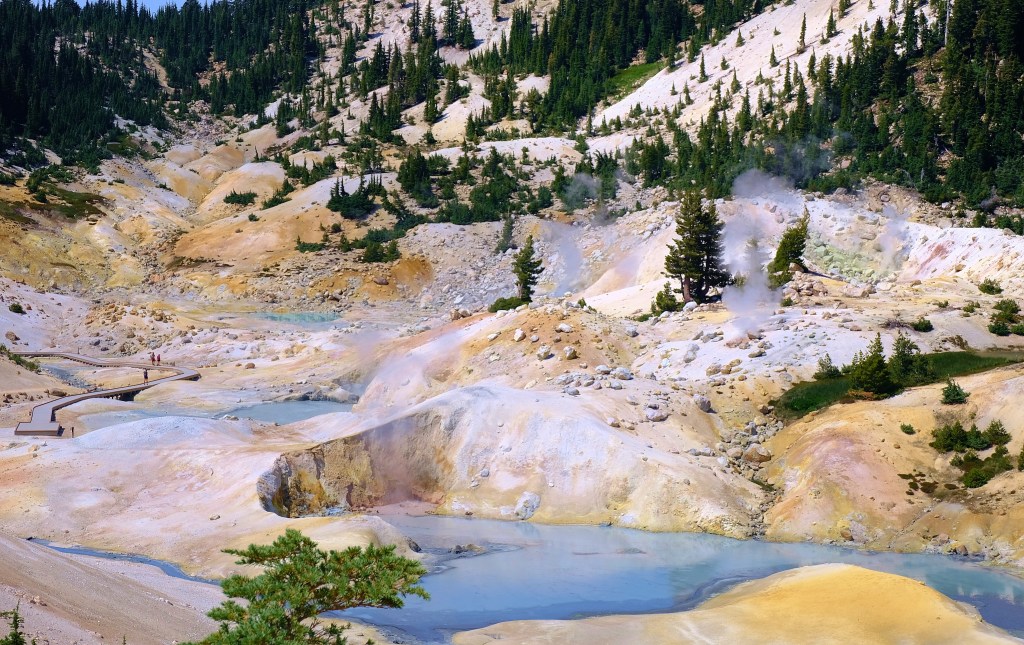
Photo Credit: Sally Woodbridge
Back at the campground the wildlife provided a comic interlude. Low-slung golden-mantled ground squirrels zipped around with their tails erect like tiny furry dodgem cars. Extra entertainment was added when they attempted to do this with unfeasibly large pine cones clamped determinedly in their front teeth. The anarchic main act were Steller’s Jays. Summoned by the merest squeak of the door of the bear-proof food store, one powder blue avian would pose and perform parkour moves off the tree trunks whilst his accomplice, with his Mohican punk crest flicking up and down with excitement, yellow eyes darting, would attempt to steal tasty morsels.
Lassen Volcanic National Park only measures 10 by 15 miles but packs in all four types of volcano, 150 miles of hiking trails including a 17 mile section of the iconic Pacific Crest Trail, and over 745 different species.
It was now time to scale the volcano. Lassen Peak at 3187m is also known as Kohm Yah-mah-nee (snow mountain) by the Atsugwei, Yana, Yahi and Maidu people. This mountain is the second highest in the Cascade mountain range and can hold steep angled snow on its upper slopes until August whilst the neighbouring Great Basin Desert to the east bakes in 40°C heat. We hit the slopes at 7am. A steadily ascending, immaculately maintained path swung back and forth up the dusty grey south-east ridge of the plug dome volcano. Black and white harsh-throated Clark’s Nutcrackers squawked at us from their perches on the tippy-top of the gnarled whitebark pine. Glossy black Ravens wheeled overhead, beady eyes searching for a tasty mouse-sized pika breakfast in the talus slope. Beside the path pale lilac lupins in their swathes of silver green leaves jostled in the chilly breeze.
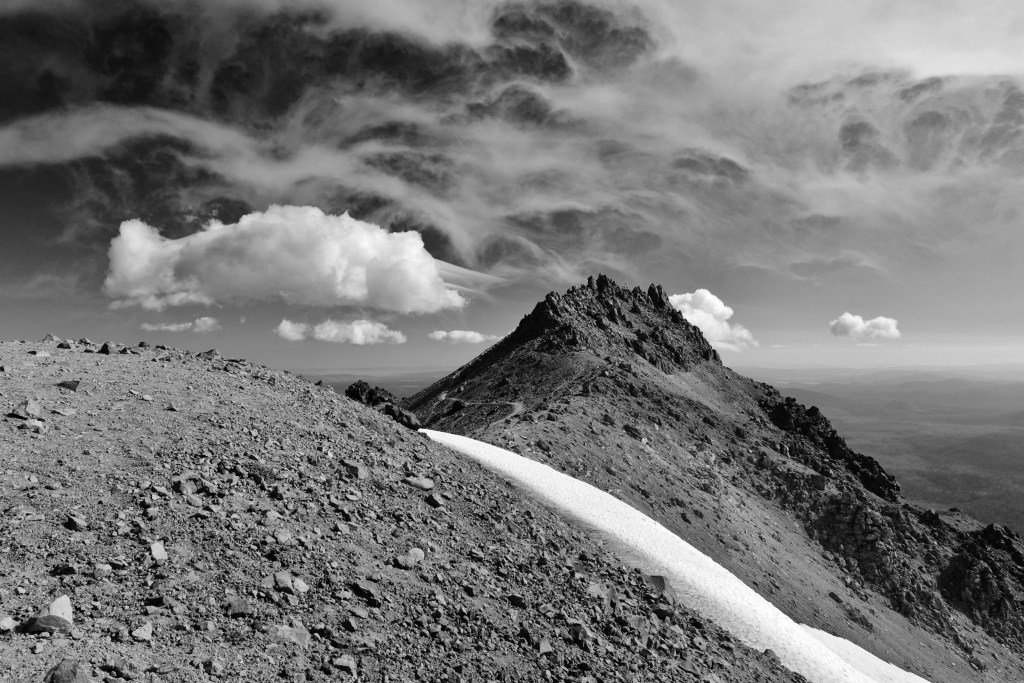
Photo Credit: Sally Woodbridge
As we gained height uninhabited land stretched below us on all sides, emerald lakes, lush meadows and silver rock slopes dotted with dark green trees. A few miles away the narrow wisp of a small wild fire smudged grey against the sky. The path flattened, passed through a short snow-bank then rose steeply on jumbled shattered rock. And then it happened. We’d reached the summit. To the north, beyond the jagged Chaos Crags was the highest peak in the Cascade Mountain range. At over 4,300m high Mount Shasta was a ghostly streak; a snow- white shimmer in the summer heat and dust. Now there’s another adventure.
Only by going alone in silence, without baggage, can one truly get into the heart of the wilderness. All other travel is mere dust and hotels and baggage and chatter.
John Muir
 SallyW Outdoor Adventures