
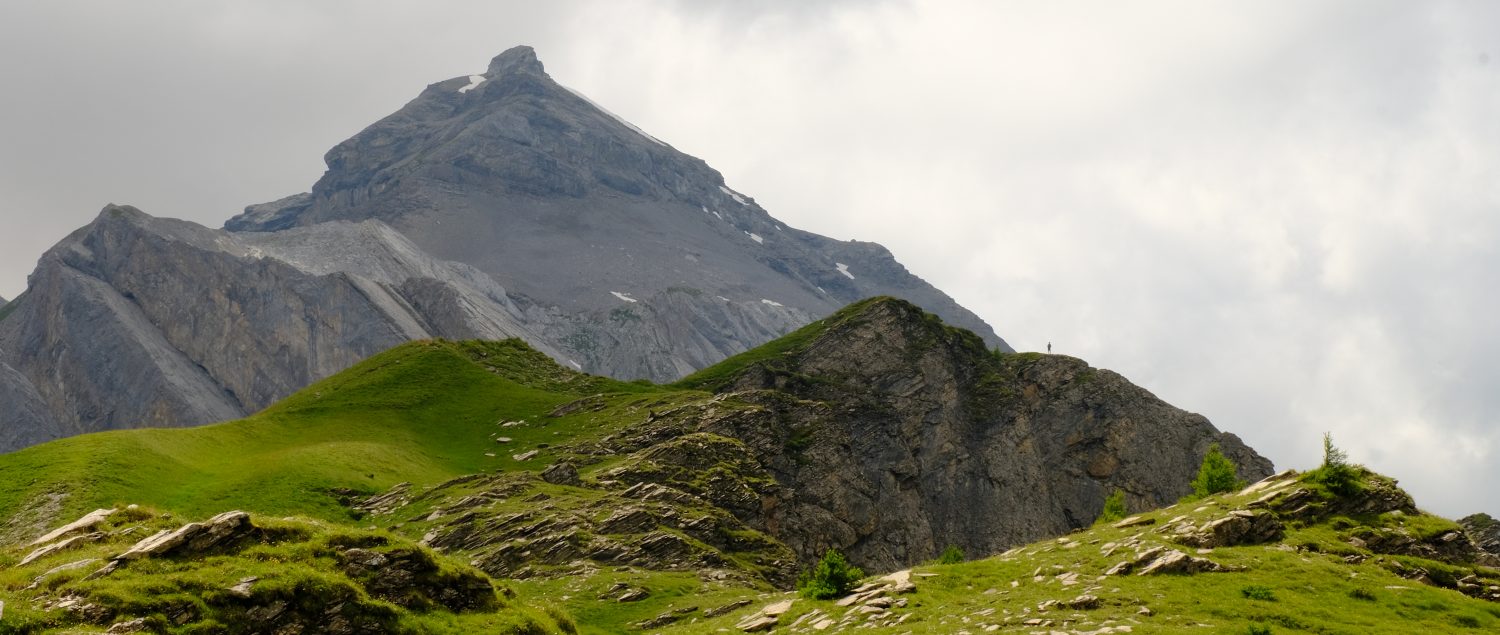

Does it seem excessive to fly an hour north of Delhi, drive for a day and a half, then trek for two days just to see a cow’s mouth? Not when it’s the holy site Gaumukh literally ‘the cow’s mouth’ in Hindi. This is where the Bhagirathi, one of the six headstreams of the Ganges, emerges from the snout of the Gangotri glacier in the Indian Himalayas.
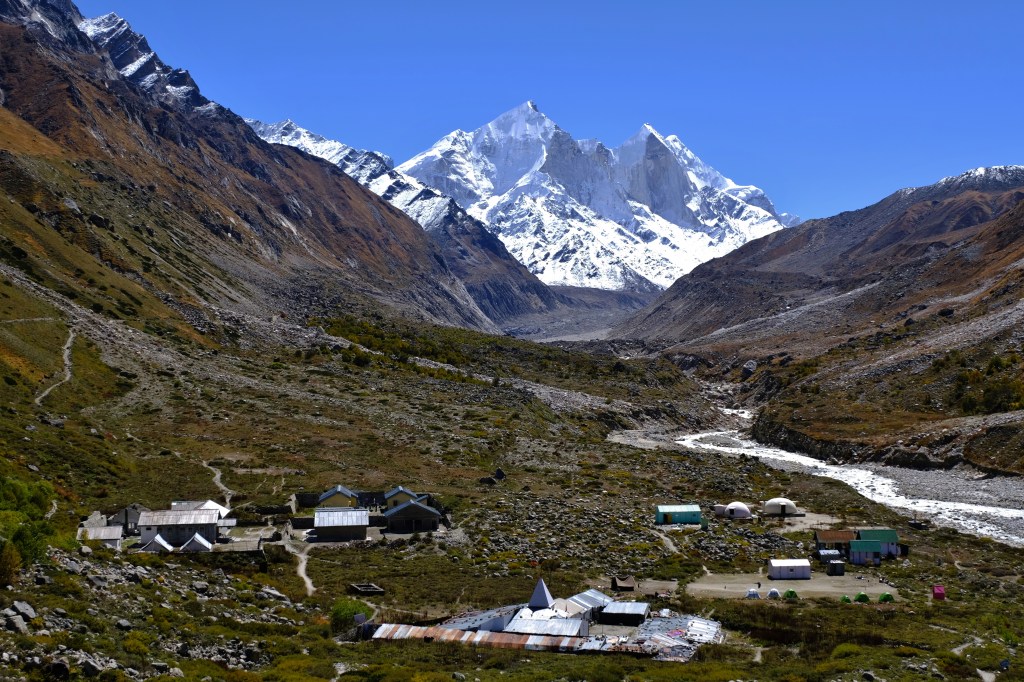
Photo Credit: Sally Woodbridge
Expeditioning is never straightforward. Here communication can be difficult with patchy mobile phone signal, no legitimate use of satellite phones due to border tensions, glacially slow wifi and frequent powercuts. Roads slide away under sustained rain, roadworthy vehicles are scarce, supplies are gathered from a range of shops en-route, strikes and protests are common and months before the trek labyrinthine bureaucracy has to be negotiated for licenses and permits. Luckily Bishan from High Places Adventurer (www.highplacesadventurer.com ) is a fixer extraordinaire and we began the 90km drive from Uttarkashi to Gangotri mid-morning.

Photo Credit: Sally Woodbridge
Packed in the 4×4 with local guide Gokul, our cook Kishan, cooks helper Dinesh, tents, equipment , food and fuel we picked up supplies, delivered packages and dropped by on Bishan’s relative en route . By mid-afternoon Cathy and I were scoffing delicious momos, washed down with sweet, fragrant chai in the café beneath our clean functional hotel room.

Photo Credit: Sally Woodbridge
Our good fortune then took a downturn. Unseasonal persistent rain and snow kept us marooned in Gangotri the next three nights. The National Park was not letting trekkers ascend into the mountains and the roads out were dangerous too. Higher up paths were being washed away or blocked with rockslides and the available accommodation in the park was being used by trekking groups already up the valley. We later met a group who had waded down avalanche-prone slopes from their base camp for Bhagirathi II and were stuck at Bhojbassa at 3792m unable to descend further due to rockfall hazard.
Many groups on tighter schedules than ours had to head straight home once the roads were open. Some groups who had promised work to porters based in Gangotri left and reneged on their agreements. Bishan paid all our porters for the time he’d agreed to hire them for, we all stayed warm and dry in the accommodation and all ate the excellent food Kishan cooked for us on site, and drank many cups of chai.
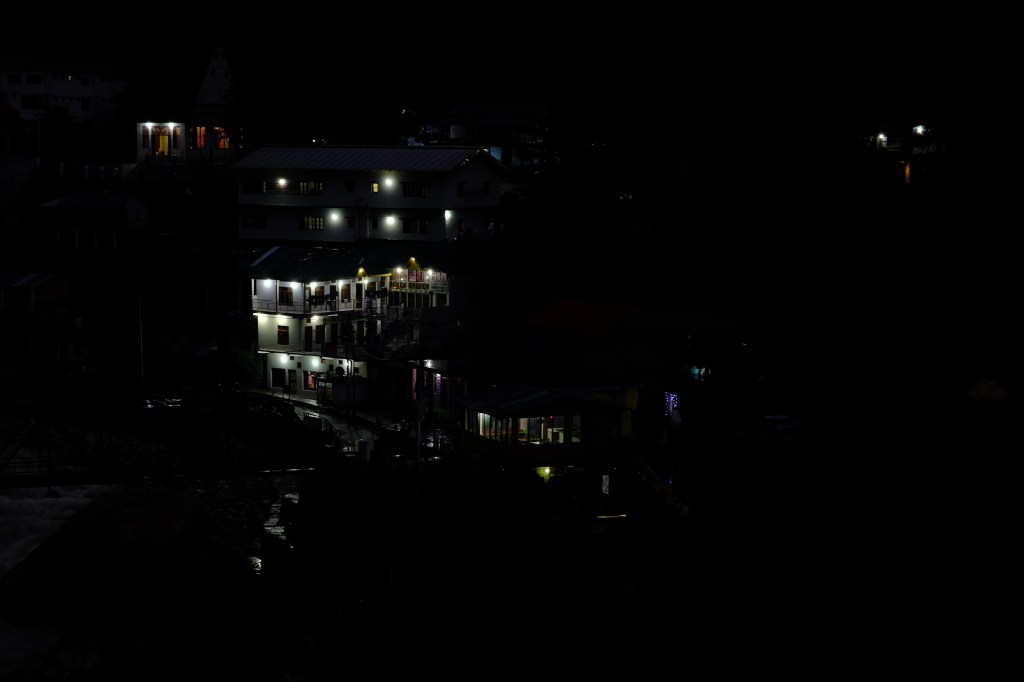
Photo Credit: Sally Woodbridge
Diary entry Tuesday 25th September “Yay! At last! The weather is good! We woke up to blue sky and just a few fluffy clouds, such an incredible change.” There was a huge buzz of energy in the town, outside the hotel sirdars and porters were bustling to get ready. Even though we had the permits Gangotri National Park only admits 150 people per day so Bishan quickly shooed us off up the track with Gokul to get to the park gates early. Even though we’d had a few days acclimatizing to the altitude at Gangotri (3048m) moving swiftly with one third less oxygen than at sea level was never going to be that quick, so we trudged on taking in the expanding views of the snow topped mountains, splashing waterfalls and trees showing the first signs of autumnal colour.
Pied wagtails and a pair of turtle doves accompanied our journey as we snacked on Garhwali apples and nibbled the fragrant, polished red skins of rosehips from the briars lining the route.
The path to our campsite at Chirbasa, 9km and 466m of height gain away, was mostly good. There was occasional evidence of huge rocks from the boulder clays above the path having slid down the mountainside but most of the little wooden bridges, made from three long tree trunks with smaller branches nailed on at right angles, were in place. Pied wagtails and a pair of turtle doves accompanied our journey as we snacked on Garhwali apples and nibbled the fragrant, polished red skins of rosehips from the briars lining the route.

Photo Credit: Sally Woodbridge
Chirbasa campsite sits in a glade of silver trunked, golden leaved Himalayan birch, watched over by a circle of 6000m plus peaks, including the Bhagirathi I, II and II and Shivling. The Bhagirathi river provides a background roar echoing back and forth across the valley. At first I found it hard to appreciate the scene, I’d bustled about a bit too quickly helping to erect the tent and had developed a pounding headache and a queasy stomach, obvious signs of my lack of acclimatization. A couple of paracetamol and a quiet sit down with a hot cup of chai helped, as did the tranquil setting. We ate another superb three course dinner in the warm kerosene fug of the mess tent and slept well, even managing a quick photo session of the nighttime mountains combined with a wee in the toilet tent around three am (thereafter known as pee ‘o’clock).
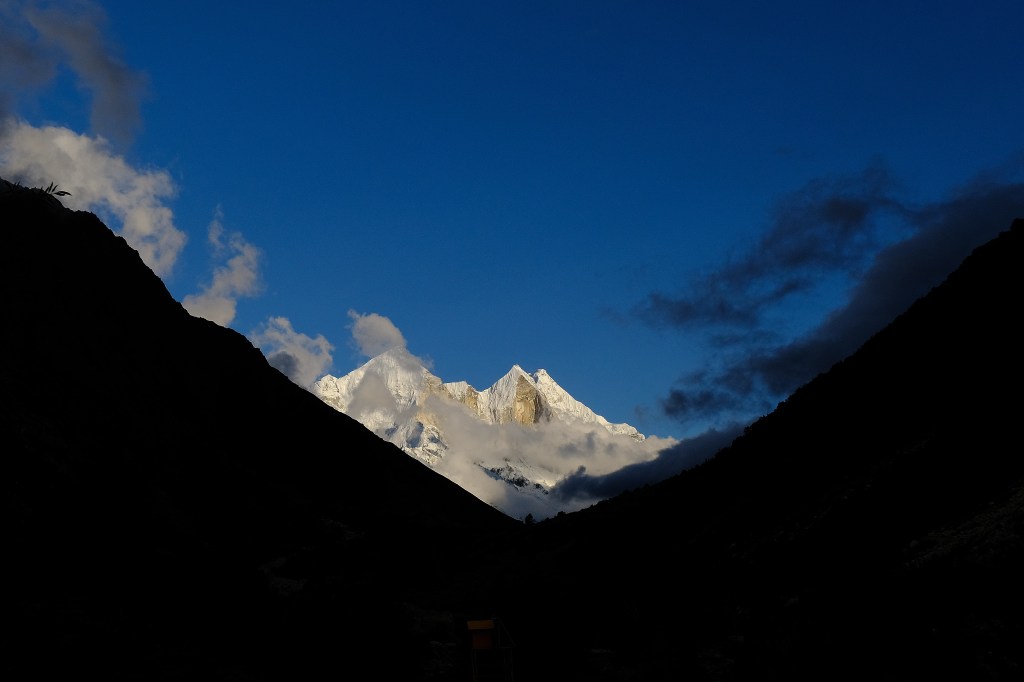
Photo Credit: Sally Woodbridge
The path onwards had been more badly affected by the rain so, instead of putting our porters at risk carrying loads further up the valley, they stayed at the campsite and the rest of us made our way up to the small outpost Bhojbasa then beyond to the cow’s mouth itself, Gaumukh at 3892m.
Walking in places like this just underlines for me the constant change in these high mountain environments. Paths and roads are made and remade, plants take hold on the rubble-like screes, shrubs and trees grow then a mudslide or avalanche sweeps down and the process starts again. The mountain people have to continually adapt, and visitors have to abandon their fixed itineraries and adapt too. Gaumukh changed significantly in 2016, a moraine bank holding back a high lake on the plateau above collapsed and a huge wall of rock and mud cascaded down, shifting the line of the river and closing the usual path to the high alpine meadow Tapovan, our original objective.

Photo Credit: Sally Woodbridge
The shrine sat in a landscape of pale grey boulders, red fluttering prayer flags, cerulean blue sky and the snow encrusted peaks of the Bhagirathis and Shivling. We all approached the river with respect and splashed ourselves with the ice cold grey green holy water. A flock of glossy black yellow-billed chough wheeled and swooped above and around us, their piercing trilling calls cutting through the constant white noise of the wind and water. From holy cow’s mouth this water would join the Ganges and flow across India to the sea.
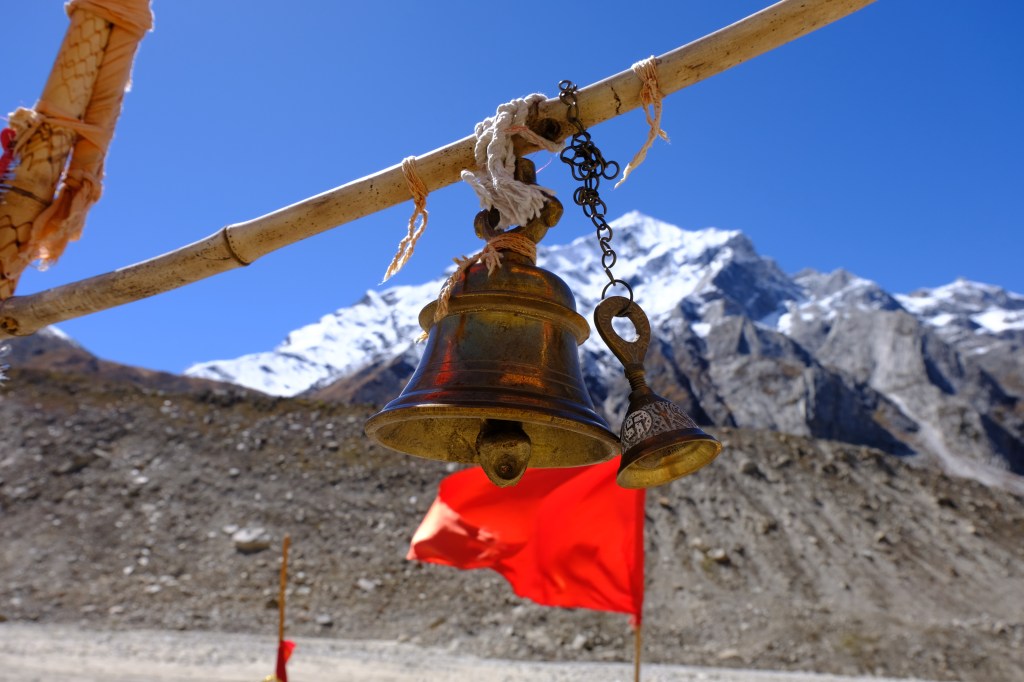
Photo Credit: Sally Woodbridge
Cathy and I were on a trek organized by her long-term friends at High Places Adventurer (www.highplacesadventurer.com ) a trekking company based in Uttarkashi in Northern India and run by locally born Bishan Singh Negi. I was hired by Cathy as an experienced International Mountain Leader to provide advice to the company on tailoring their treks to a western clientele. As such my travel and all trekking costs were paid for.
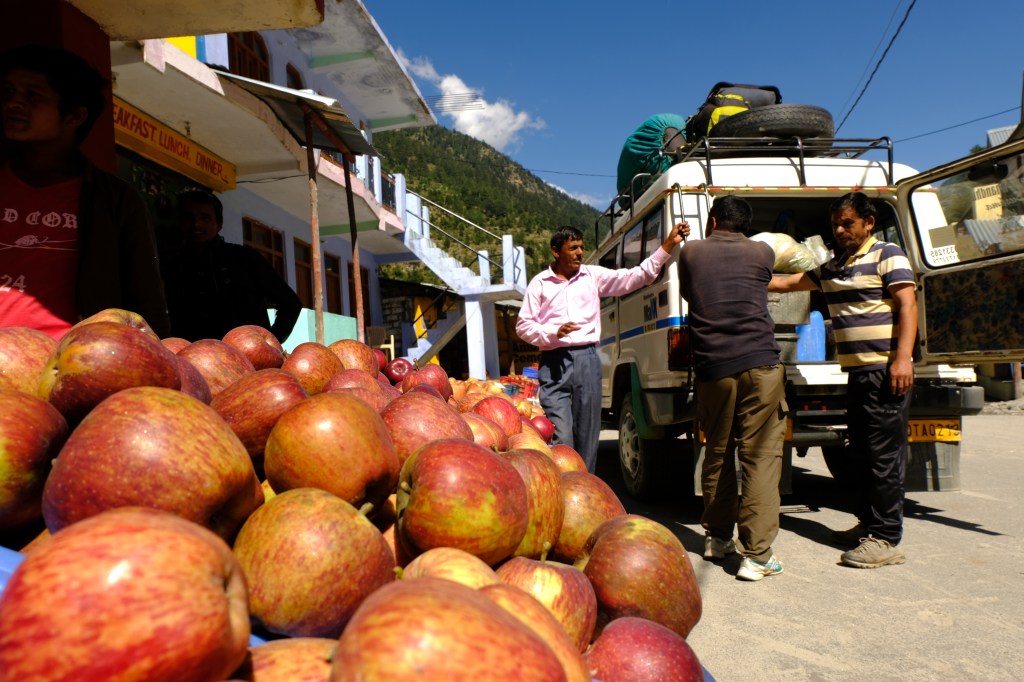
Photo Credit: Sally Woodbridge
 SallyW Outdoor Adventures